
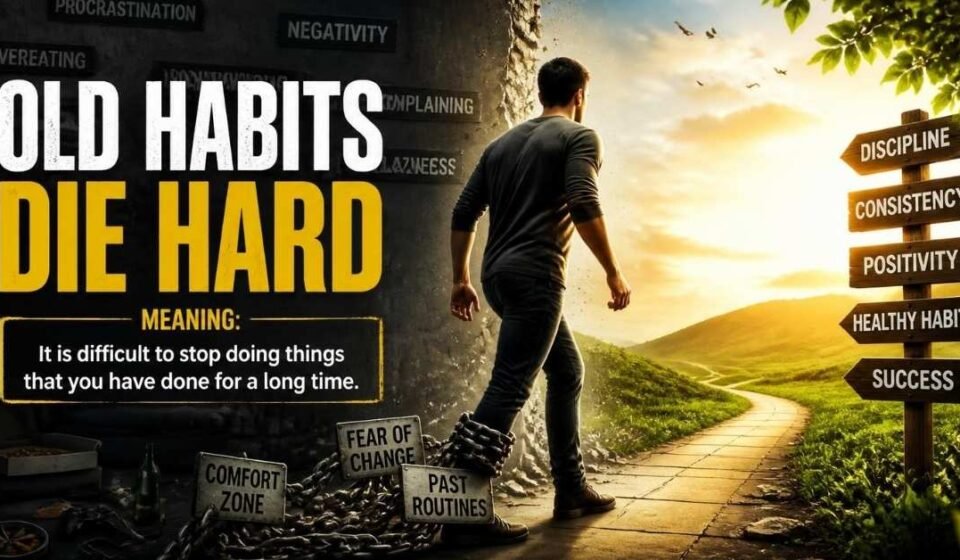
“Old habits die hard” means people struggle to drop behaviors they’ve repeated for years. Even when they want to change, the familiar routine keeps pulling them back.Ever promised yourself you’d stop scrolling at midnight, then picked up your phone anyway? That’s this English idiom at work, and it fits more moments than you’d guess.
This guide covers the meaning, the origin, real examples, and the slip-ups to avoid. Stick around, because the common mistakes section surprises plenty of people.
Meaning at a Glance
Here’s the short version.
The phrase says a long-standing habit is tough to break, even with good intentions.
It’s a common expression you’ll hear in everyday conversation, at work, and in movies.
It sounds a little wry, like a shrug mixed with a smile.
What Does Old Habits Die Hard Mean?
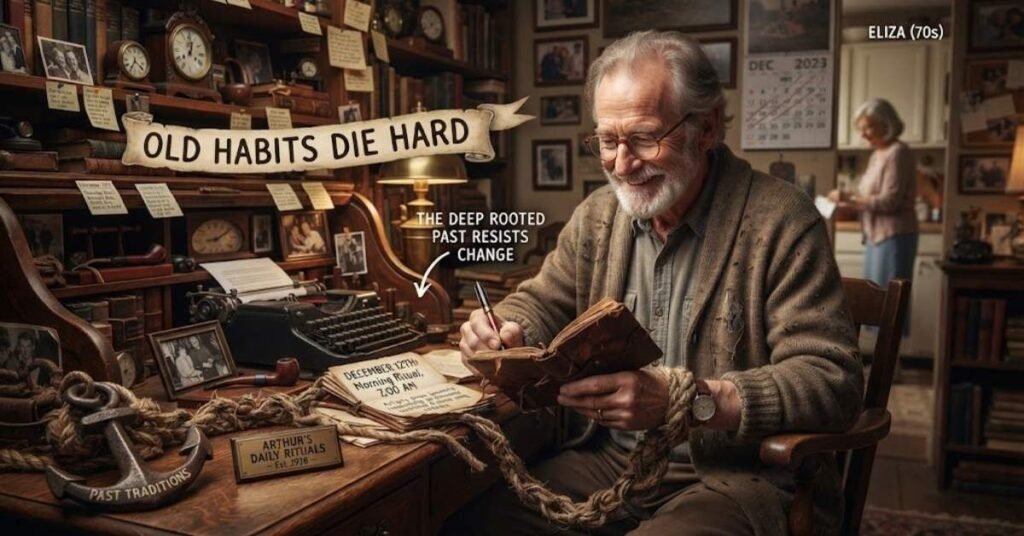
Let’s slow down and unpack it.
The words are simple, but the figurative meaning carries more weight than the literal meaning.
Nobody’s dying here, of course.
The “death” stands for the end of a habit, and “hard” means it fights back.
Simple Definition
An idiomatic expression like this one means something different from its separate words.
In plain terms, established behaviors don’t vanish just because you decide they should.
Think of it as a universal truth about human behavior.
Anyone who’s tried to change a daily routine already knows it.
What Does the Idiom Suggest?
The idiom suggests that repeated behavior builds a groove, and grooves are hard to leave.
Your brain picks the easy path, which is usually the familiar pattern.
It also hints at something kind.
Slipping back isn’t a character flaw, it’s just how habit formation works.
Where Did the Phrase Come From?
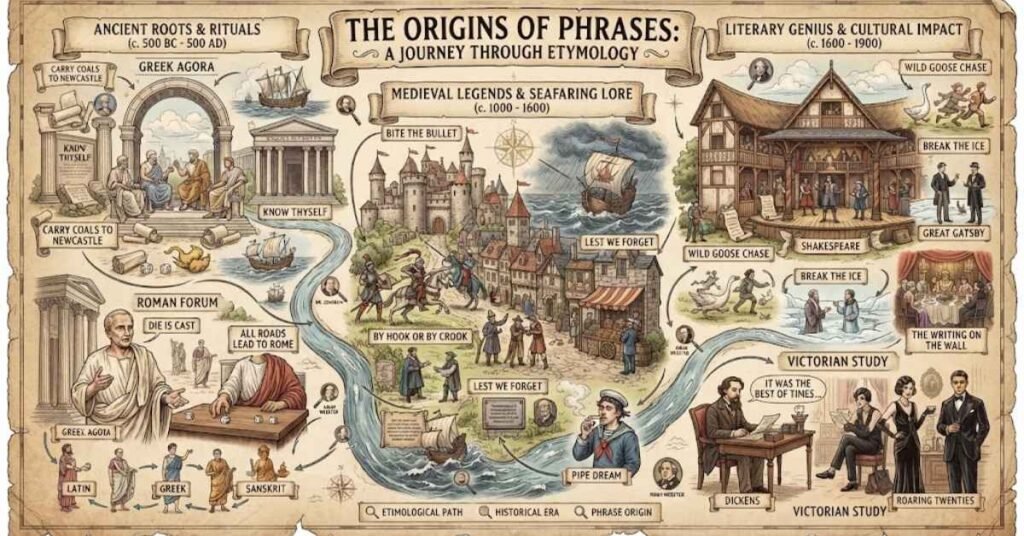
Nobody can name the person who said it first.
Writers have joked about stubborn customs in English for centuries, and the wording settled over time.
The idea itself is much older.
Thinkers in ancient Greece described habit as a kind of second nature, which is the same point wearing different clothes.
The word “die” explains the flavor.
In older English, “die hard” described something that resisted until the very end, so a habit that “dies hard” puts up a real fight.
How to Use Old Habits Die Hard Correctly
You can drop this phrase into most chats without trouble.
It works best after someone slips back into an automatic behavior they meant to leave.
Tone matters more than grammar here.
Say it lightly, and you sound understanding rather than critical.
In Everyday Conversation
Picture a friend who moved flats months ago.
She still turns toward her old street after work, and she laughs, “Old habits die hard.”
That’s the sweet spot.
You’re describing a harmless slip tied to familiar routines, not judging anyone.
At Work
Say your team switched to a new tool, but Marcus keeps emailing spreadsheets.
His manager sighs, “Old habits die hard,” and sends a friendly reminder.
In workplace conversations, the phrase softens a tricky moment.
It acknowledges the struggle without pointing fingers.
At School or College
Students pick up school routines early.
A teacher might say it when a class keeps handing in work the old way after a new classroom rule starts.
In college life, you’ll hear it around late-night cramming.
Everyone swears they’ll study earlier next term, and then the comfort zone wins again.
In Family Life
Parents use it all the time.
A dad who still calls the thermostat “the heater knob” probably gets teased with this line.
It also shows up around lifelong preferences.
Grandma won’t switch her brand of tea, and the family just smiles.
Practical Examples in Sentences
Seeing the idiom in action helps it stick.
Here are sentence examples that sound natural, not stiff.
- “I switched to decaf, but I still reach for regular. Old habits die hard.”
- “He’s been retired a year and still wakes at 5 a.m. Old habits die hard.”
- “We moved the meeting room, yet half the team still goes to the old one. Old habits die hard.”
- “She told herself she’d text less, but here we are. Old habits die hard.”
Notice the pattern.
Each line shows an attempt to change, followed by a slip, then the idiom as the punchline.
Common Situations Where People Use This Idiom
Certain moments trigger this phrase again and again.
Once you spot them, you’ll start hearing it everywhere.
Most of them involve repeated practice that turned into automatic actions.
You stop noticing the habit, so changing it feels like swimming upstream.
Health and Fitness
New Year goals are the classic example.
Someone starts exercise in January, then drifts back to the couch by March.
The same goes for quitting smoking, reducing sugar, drinking water more often, or sleeping earlier.
A healthy lifestyle asks you to fight habits you’ve had for decades.
Technology
Technology invites this idiom constantly.
You adopt digital planners, but your hand still reaches for physical calendars and sticky notes.
Some people keep printing documents they could read on a tablet.
Others skip software shortcuts because the slow way feels safer.
Workplace Changes
Every company hits this wall during change management.
New workflows launch, and employees quietly cling to traditional methods.
Take a small office that moves to shared cloud folders.
Two months later, someone still saves files to their desktop, because file organization their way feels natural.
Family Traditions
Family traditions are habits with feelings attached.
That’s why holiday traditions, family recipes, and weekly gatherings rarely change without a fuss.
You might hear it when a cousin insists on handwritten notes and birthday cards.
Even in a world of text messages, some rituals stay put.
Personal Behaviour
Then there are the quirks that belong only to you.
Maybe you check social media the second you wake up, or reuse the same passwords out of laziness.
Driving habits count too.
You take the old route to work even after a faster one opens.
Similar Idioms and Related Phrases
English has plenty of cousins to this idiom.
Each one has its own shade, so pick the one that fits.
- You can’t teach an old dog new tricks says older people won’t learn new things. It’s blunter and can sound rude.
- Creature of habit describes someone who loves routine. It’s gentler and often neutral.
- Stuck in your ways points at stubbornness about doing things a set way.
- Back to square one means you lost your progress and must restart.
- Change takes time is a plain reminder to be patient.
“Old habits die hard” sits in the middle.
It’s kinder than the old dog line and more about struggle than stubbornness.
Common Mistakes
Plenty of learners use this phrase a bit off.
Here are four slip-ups worth dodging, so your correct usage stays sharp.
Thinking It Means Change Is Impossible
The idiom says change is hard, not impossible.
Those are very different claims.
If you say it to a friend who’s quitting sugar, add some encouragement.
Otherwise, it can sound like you expect them to fail.
Using It for Brand New Behaviors
A habit needs history.
You can’t use the phrase for something you started last week.
Say a coworker just began a new coffee order and keeps forgetting it.
That’s a learning behavior, not an old habit, so the idiom doesn’t fit.
Using It in Formal Writing
This is informal writing territory.
It works in blogs, speeches, and casual presentations, but it sounds odd in legal documents or academic writing.
In formal writing, swap in plainer words.
Try “established behaviors are difficult to change” instead.
Confusing Habits With Personality
A habit is what you do, not who you are.
Someone who bites their nails isn’t “a nervous person” by nature.
Mixing the two turns a light idiom into an insult.
Keep it about the behavioral habits, and leave personality traits out of it.
Why Old Habits Die Hard: What Psychology Says
There’s real science behind the saying.
Behavioral psychology describes a habit loop: a cue, a routine, and a reward.
Over time, the brain patterns involved get so efficient that they run on autopilot.
That’s why you can drive home and barely remember the trip.
Human psychology favors saving energy.
So the brain happily repeats what worked before, even when you’d like it to stop.
How to Break Old Habits Without Fighting Yourself
Good news, you’re not stuck.
Breaking habits works best when you stop relying on willpower alone.
Try these small moves:
- Build awareness by noticing when the habit kicks in.
- Use routine replacement, swapping the habit for a better one with the same reward.
- Change your setting, like moving the snacks out of sight.
- Stay consistent and expect slip-ups along the way.
Think about the morning routine with coffee and caffeine.
If you want fewer cups, replace the second one with tea at the same time, and the ritual survives.
Patience and persistence do most of the heavy lifting.
Real lasting change usually takes weeks, not days.
Why the Idiom Remains Popular
People keep using this phrase because it feels true.
You can find it in books, novels, newspapers, magazines, television shows, and movies.
It’s short, easy to remember, and a bit funny.
That makes it a favorite for English learners and native speakers alike.
It also builds quick connection.
When you say it, you admit you’re human, and listeners relax.
Conclusion
“Old habits die hard” captures a simple truth about personal growth and self-improvement. Change feels slow because deeply rooted habits run on autopilot.Use it with warmth, skip it in formal documents, and don’t treat it as a verdict. It’s a gentle nod to how hard habit change really is.
Now it’s your turn. Which habit of yours refuses to die, and what’s your trick for beating it? Drop it in the comments, and share this with a friend who’d get a kick out of it.
FAQs
What does old habits die hard mean?
It means long-practiced behaviors are tough to stop. Even with strong motivation, people tend to slip back into the familiar patterns.The phrase usually carries a light, understanding tone. It describes the struggle rather than blaming anyone.
Is old habits die hard an idiom?
Yes, it’s one of the common English idioms. Its meaning goes beyond the literal words, which is what makes it an idiom.You’ll spot it in conversation, writing, and media. It’s a staple of everyday English.
Can old habits die hard refer to good habits?
Yes, it can. A lifelong habit like morning walks can also be hard to give up.Most people link it to negative habits, though. Still, the idea of persistence applies to positive habits just as well.
Is old habits die hard positive or negative?
It’s neutral. The tone depends on which habit you’re talking about and how you say it.Used for a bad habit, it sounds rueful. Used for a good one, it can sound like praise.

Matt Henry is a writer and researcher at Trexoleen, specializing in text meanings, slang, abbreviations, acronyms, and modern internet language. He is passionate about making confusing terms simple and easy to understand.