
You saw it in a chat. Someone typed LMFAO and you paused for a second.Was it a joke? Was it too much? Does it mean the same thing as LOL?Here’s the short answer. LMFAO stands for “Laughing My Ass Off.” It’s internet slang for a reaction that’s way stronger than a regular laugh.
Think of it as the emotional equivalent of doubling over, not just smiling at your screen.This guide breaks down everything about LMFAO meaning, where it came from, how people actually use it, and when you should maybe think twice before typing it.
LMFAO – Quick Meaning
Simple Definition
LMFAO is a texting abbreviation built on top of the older term LMAO. The extra F just cranks up the volume. It’s used when something is genuinely, painfully funny, not just mildly amusing.
People use it in text messages, comment sections, and pretty much every messaging app you can think of. It’s become part of everyday chat slang for millions of people.
Quick Examples
Here’s how it usually shows up in real conversations:
- “bro tripped on his own shoelace LMFAO”
- “she said that with a straight face LMFAO I can’t”
- “the dog stole the whole sandwich LMFAO no shame”
Notice something? It’s almost never used alone. It usually rides along with a specific, funny moment.
Origin & Background of LMFAO
LMFAO grew out of the same early internet world that gave us LOL and LMAO. Back in the days of AOL Chatrooms and MSN Messenger, typing fast mattered more than typing formally. Shortcuts became a whole language of their own.
As texting culture and online gaming forums grew in the late 2000s and early 2010s, people wanted stronger reactions than plain old LOL. LMAO wasn’t cutting it for the really wild stuff, so LMFAO picked up the slack.
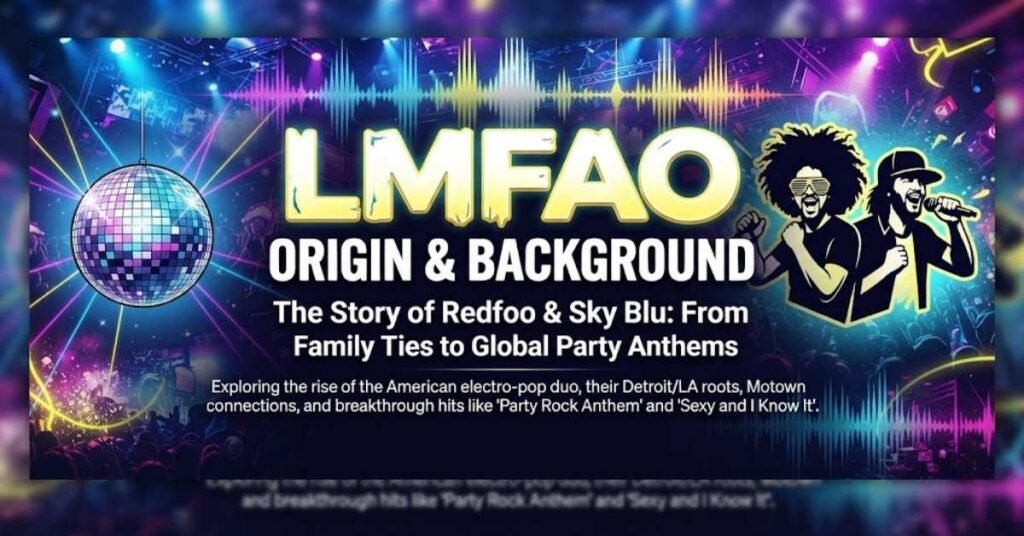
Funny side note: the music duo LMFAO, known for the song Party Rock Anthem, borrowed this same slang for their band name. That song blew up everywhere, which only pushed the acronym further into mainstream pop culture. Two totally different things, same three (well, four) letters.
Real-Life Conversations Using LMFAO
Reading a definition is one thing. Seeing it in the wild is another. Here’s how it plays out across different apps.
WhatsApp Chat Example
Friend: “guess who just fell asleep during the zoom meeting” You: “LMFAO no way, on camera??”
This is classic WhatsApp chat energy. Quick, punchy, and reacting to actual real-life chaos happening in real time.
Instagram DM Example
“sent you that meme LMFAO you’re gonna lose it”
Instagram DM culture leans heavily on this word because so much of it revolves around sharing funny screenshots and reaction content. It’s basically a warning label that says “this is genuinely funny, brace yourself.”
TikTok Comment Example
Under a video of someone messing up a recipe: “LMFAO the smoke alarm going off mid video is sending me”
TikTok comments are where this word thrives the most. Between viral videos, meme reactions, and endless comment threads, LMFAO practically lives there rent free.
Text Message Example
“wait he actually said that to his boss LMFAO he’s cooked”
In a text message, it often signals disbelief mixed with humor. Something happened that’s both funny and a little chaotic.
Emotional & Psychological Meaning Behind LMFAO
Why People Use It
People don’t just type LMFAO because they’re bored. It carries real emotional expression. It’s a way to show authentic reactions without needing a video call or a voice note.
Sometimes it’s pure genuine laughter. Other times it’s shock mixed with humor, like when something is so unexpected you don’t know whether to gasp or laugh. It can even carry a bit of relief through humor, especially after a tense moment finally breaks into something funny.
Emotional Tone It Carries
The emotional tone behind LMFAO shifts depending on who’s talking and what’s going on. Between close friends, it often carries friendly teasing or light sarcasm. In a group chat reacting to a wild story, it can carry pure emotional surprise.
It’s rarely neutral. That’s actually the whole point of it. Tone matters more than the literal words here, and LMFAO is built to carry a spike of emotional energy that plain text usually can’t.
How LMFAO Is Used in Different Contexts
Social Media Usage
On social media platforms like TikTok, Instagram, Snapchat, and X (formerly Twitter), LMFAO is basically background noise. It shows up in reaction tweets, comment sections, and captions under funny content.
Social media culture rewards fast, expressive reactions, and this acronym fits that pace perfectly. It’s short, it’s loud, and it gets the point across instantly.
Friends & Relationships
Among friends, LMFAO often works as a kind of social connection glue. It shows you’re actually paying attention and reacting, not just leaving someone on read. Friendly group chats run on this kind of quick, expressive slang.
It also softens things. A slightly savage joke followed by LMFAO usually reads as playful, not mean.
Work or Professional Settings
Here’s where you need to slow down. Professional communication, client communication, and formal emails are not the place for this one. Most workplace chats stick to safer terms, if any slang at all.
Even in more relaxed workplace communication on tools like Slack, LMFAO can come across as too casual, especially with people you don’t know well yet.
Casual vs Serious Tone
Casual tone and serious tone are basically opposites here. LMFAO belongs firmly in the casual bucket, alongside informal conversations and entertainment spaces. Drop it into a serious conversation about someone’s bad day, and it can land wrong fast.
Common Misunderstandings About LMFAO
1. People Think It Always Means Real Laughter
Not always true. Sometimes it’s just a conversational habit, typed on autopilot rather than actual laughing out loud.
2. Some Users Don’t Realize It Contains Profanity
The full form does include a curse word. Some non-native English speakers and younger users don’t always realize this, which can cause confusion around where it’s appropriate.
3. It Can Sound Rude in Serious Situations
Using it near sensitive topics, like bad news or a condolence message situation, can come off as careless. Context and timing decide everything here.
4. Tone Changes Based on Context
The same three letters can mean pure joy, sarcasm, or even mild mockery. Context-dependent meaning is basically the whole personality of this acronym.
Comparison Table: LMFAO vs Similar Slang
| Term | Meaning | Intensity | Best Used For |
| LOL | Laughing out loud | Mild | Light jokes, casual chats |
| LMAO | Laughing my ass off | Medium | Funny stories, decent jokes |
| LMFAO | Laughing my f***ing ass off | High | Extreme laughter, wild moments |
| ROFL | Rolling on the floor laughing | High | Dramatic reaction to a joke |
| XD | Laughing face expression | Mild to medium | Playful, cartoonish tone |
Key Insight
LMFAO sits near the top of the laughter and humor entities ladder. It’s stronger than LOL and LMAO, but it’s not always meant literally. Think of these terms as a volume dial, not a strict measuring tape.
Variations and Related Slang Terms
1. LOL
The original. Laughing Out Loud, used for pretty much anything mildly funny.
2. LMAO
One step up. Still common, still safe for most casual conversations.
3. ROFL
Rolling on the Floor Laughing, a slightly older term that still pops up now and then.
4. HAHAHA
Straightforward and universal. No acronym needed, just pure haha energy stretched out.
5. XD
A funny reaction emoticon, popular in gaming communities and anime communities especially.
6. I’m Dead
A dramatic way to say something was hilarious. Common in meme culture everywhere.
7. Crying
Often paired with a crying emoji, meaning something was so funny it’s almost overwhelming.
8. BRUH
Not always about laughing. Sometimes it’s disbelief, sometimes it’s mild judgment, sometimes both at once.
9. SEND HELP
Used when something is so ridiculous that words alone can’t cover it.
10. I Can’t Even
Signals total loss for words, usually from laughing too hard to type properly.
How to Respond When Someone Uses LMFAO
Casual Replies
“LMFAOOO stop” or “wait that’s actually insane” work fine in most friendly conversations.
Funny Replies
Throw back a related joke or a meme reaction. Matching their energy keeps the conversation alive.
Mature or Confident Replies
A simple “haha yeah that got me too” works when you want to sound relaxed without going overboard.
Private or Respectful Replies
If it’s a more formal meetings setting or unfamiliar contact, a plain “that’s funny” keeps things safe and clear.
Regional & Cultural Usage of LMFAO
Western Culture
In the US, UK, and Canada, LMFAO is everyday online slang, used freely across age groups, though older audiences still tend to use it less.
Asian Culture
Across parts of Asian culture, especially in K-pop fandoms and streaming communities, LMFAO gets mixed in with local slang, creating a fun blend of languages online.
Middle Eastern Culture
In Middle Eastern culture, usage tends to lean more toward younger, internet-savvy users, often alongside English learning through social media users interaction.
Global Internet Usage
At this point, LMFAO is part of the worldwide internet vocabulary. It crosses borders faster than most modern slang, thanks to shared meme culture and viral trends.
Is LMFAO Outdated in 2026?
Short answer, not really. While newer terms like I’m Dead or SEND HELP have joined the mix, LMFAO still holds its ground in daily chats.
Viral slang tends to layer rather than replace. People now use LMFAO alongside newer phrases, not instead of them.
LMFAO in Gaming and Streaming Communities
Gaming chats and streaming communities move fast, and LMFAO fits that pace perfectly. A clutch fail or a ridiculous in game moment usually gets an instant LMFAO in chat.
It’s become part of the shared online behavior in these spaces, almost like a built in reaction button.
Conclusion
LMFAO isn’t complicated once you break it down. It’s just a stronger, louder cousin of LOL and LMAO, built for the moments that actually make you laugh out loud instead of just smile.Use it with friends, skip it at work, and always read the room before you type it near something serious.
At the end of the day, LMFAO is just another piece of digital communication that helps people express real emotion through text. Know your audience, read the context, and you’ll never misuse it again.
FAQs
What does LMFAO stand for?
It stands for “Laughing My F***ing Ass Off,” a stronger version of LMAO.
Is LMFAO offensive?
It’s mildly offensive due to the curse word inside it, so it’s best kept out of formal or professional settings.
Is LMFAO stronger than LOL?
Yes. It signals intense laughter, while LOL usually covers mild amusement.
Can I use LMFAO at work?
Generally no, especially in client communication or academic writing. Casual internal chats with close coworkers might be an exception.
Do adults use LMFAO?
Plenty do, mostly in casual settings with friends or family, just less often in formal writing.
Is LMFAO outdated?
Not outdated, just one option among many in a growing list of internet expressions.
What’s the difference between LMAO and LMFAO?
LMFAO adds profanity and extra intensity. LMAO is the slightly tamer, more widely acceptable version.

Matt Henry is a writer and researcher at Trexoleen, specializing in text meanings, slang, abbreviations, acronyms, and modern internet language. He is passionate about making confusing terms simple and easy to understand.