You get a text back. It says “idc.” Three letters, no punctuation, no emoji. Is that person annoyed? Bored? Totally fine with whatever you decide? This tiny abbreviation causes a surprising amount of confusion because it carries almost no tone on its own. That’s exactly why so many people search for its meaning every single day.
This guide breaks down what IDC actually stands for, where it came from, how it changes meaning depending on where you see it, and how to reply without misreading the room.
What Does IDC Mean? (Quick Answer)
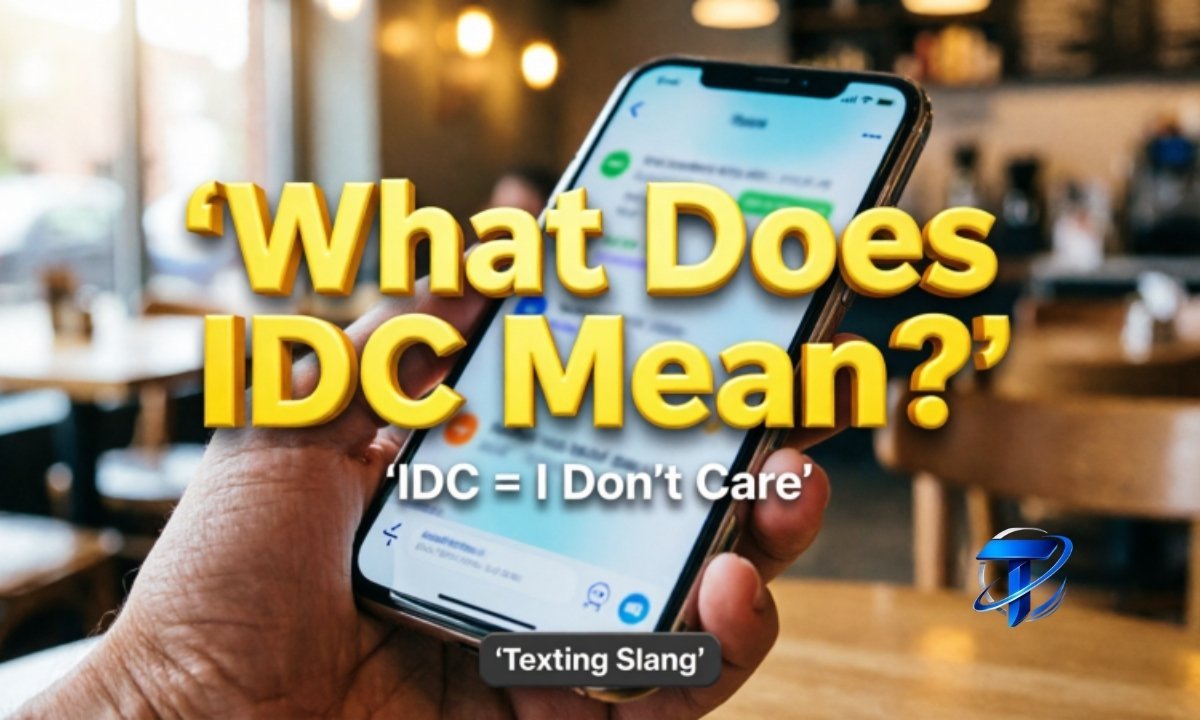
IDC stands for “I don’t care.” It is used in texting, chat apps, and social media to show indifference, a lack of preference, or a neutral stance on a topic. Depending on tone and context, it can sound relaxed and easygoing, or blunt and dismissive.
That’s the core definition. Everything else in this guide is about reading the tone correctly, because the same three letters can land very differently depending on who sends them and how.
Read Also : Uhm Meaning in Text
Where IDC Comes From
IDC is not a new invention. Shortened phrases like this go back to the early days of online chatrooms and instant messaging in the late 1990s and early 2000s, when people typed on slow connections and small phone keypads. Saving keystrokes mattered, so full phrases got trimmed down.
“I don’t care” was already a common everyday phrase, so turning it into IDC was a natural next step. It grew alongside other early internet shorthand such as LOL, BRB, and TBH. As texting and social media took over daily communication, IDC stuck around because the feeling it expresses, indifference, never really goes out of style.
How People Actually Use IDC Today
In modern chats, IDC usually shows up in one of these situations:
- Answering a low-stakes question, like where to eat or what to watch
- Responding to someone else’s opinion without wanting to argue about it
- Signaling that a topic doesn’t affect you personally
- Brushing off a comment quickly, sometimes with a hint of attitude
Example exchange:
“Where should we eat tonight?” “idc, you pick.”
That reads as relaxed and easygoing. But the same word can shift tone fast:
“I think you were wrong for saying that.” “idc.”
Same three letters, completely different feeling. The difference comes down to context, punctuation, and what came before it.
Why Tone Is So Easy to Misread
Text strips out facial expression, voice inflection, and body language. Those are the cues people normally rely on to soften or clarify a statement. Without them, a short reply like IDC can feel more intense than the sender actually meant it to be.
Here’s how the same word can carry different emotional weight:
| Message Style | Likely Tone | What It Usually Signals |
| idc (lowercase, no punctuation) | Casual, relaxed | Genuine indifference or flexibility |
| IDC. (capitalized, with a period) | Firm, final | Frustration or a closed topic |
| idc lol | Playful | Light, joking indifference |
| idc, whatever you want | Cooperative | Willing to go along with the other person |
| IDC!! | Sharp, annoyed | Irritation or a desire to end the conversation |
Punctuation and capitalization are not perfect indicators, but they give useful clues when the words alone leave room for doubt.
IDC vs Similar Slang Terms
People often confuse IDC with other short indifference phrases. Here’s how they actually differ.
| Term | Full Meaning | How It’s Different |
| IDC | I don’t care | Neutral to mildly dismissive, most common form |
| IDK | I don’t know | About lack of knowledge, not lack of interest |
| IDGAF | I don’t give a f*** | Much stronger and more aggressive than IDC |
| Meh | Mild indifference | Softer, less pointed than IDC |
| NVM | Never mind | Retracts or drops the topic entirely |
| Whatever | Dismissive agreement | Can sound more sarcastic or closed off than IDC |
Knowing these differences helps you choose the right word for the tone you actually want to send, and helps you read incoming messages more accurately.
Does IDC Mean Something Different on Each Platform?
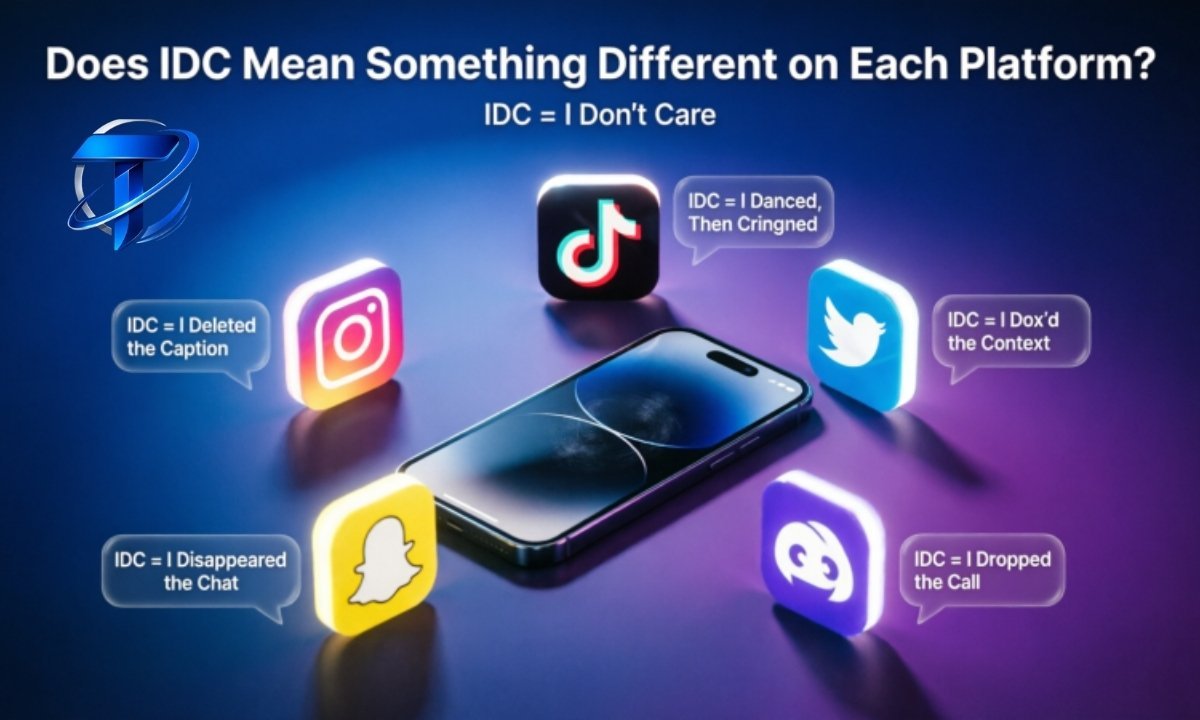
The core meaning stays the same everywhere, but the vibe can shift slightly by platform.
- Texting and WhatsApp: Usually genuine indifference between friends or family, often paired with an emoji to soften it.
- Instagram comments and captions: Frequently used to project confidence or independence, like “idc what people think.”
- TikTok: Common in captions to signal a nonchalant, unbothered attitude, sometimes for comedic effect.
- Snapchat: Quick, casual replies, often softened with emojis since the format favors speed over detail.
- Dating apps: Can signal genuine flexibility, or it can be a subtle way of creating emotional distance. Context with the rest of the conversation matters a lot here.
Read Now : HRU Meaning in Text
When Not to Use IDC
IDC is casual slang, so it doesn’t belong everywhere. Avoid it in these situations:
- Professional emails or workplace messaging, where “I have no preference” or “either option works for me” sounds more polished
- Serious or emotional conversations, where a short reply can come across as careless
- Conversations with people who may not know current slang and could misread it entirely
- Situations where the other person is genuinely seeking your input, since IDC can shut the conversation down
Swapping IDC for a slightly longer phrase in these moments protects the relationship and avoids unnecessary misunderstandings.
How to Respond When Someone Sends You IDC
Your reply should match the situation, not just the word itself.
- Casual decision: “Cool, I’ll pick then.”
- You suspect they’re upset: “Are you sure? You seem a little off.”
- Flirty or playful chat: “You always say that, come on, give me a real answer.”
- Group planning: Move the conversation forward instead of waiting on them, since “idc” often means they’re happy to follow the group’s lead.
Reading the surrounding messages, not just the single word, is the most reliable way to respond well.
Other Meanings of IDC (Outside of Texting)
IDC is not exclusively internet slang. The same three letters stand for different things in other fields:
- Medical: Invasive Ductal Carcinoma, the most common type of breast cancer, starting in a milk duct and spreading into nearby tissue
- Business and market research: International Data Corporation, a well known technology market research and analysis firm
- Electronics: Insulation Displacement Connector, a type of electrical connector used in wiring
- Government and organizations: Various councils, corporations, and coalitions around the world use IDC as an abbreviation in official names
In everyday texting, though, “I don’t care” is by far the meaning you’ll run into.
What’s New With IDC in 2026
Slang tracking through 2026 shows IDC has held steady rather than fading out, which is unusual for internet abbreviations that typically cycle out within a few years. A few current patterns worth knowing:
- IDC now frequently appears paired with emojis such as a shrug or a skull to add humor rather than genuine dismissiveness, especially among younger users on TikTok and Discord.
- It shows up more often as a confident, self assured statement in captions (“idc what anyone thinks”) rather than a dismissive reply in one on one chats, reflecting a broader shift toward using short slang for personal branding on social platforms.
- In gaming chats and Discord servers, IDC is commonly used to keep fast paced conversations moving without slowing things down, functioning more like a placeholder than an emotional statement.
- AI chat assistants and predictive text tools increasingly recognize IDC and similar shorthand, which has made typing full sentences feel optional even in slightly more formal casual settings, blurring the line between quick slang and normal texting.
None of this changes the base definition. It simply confirms that IDC remains one of the most stable and widely understood pieces of digital shorthand in current use.
Frequently Asked Questions
What does IDC mean in a text message?
IDC means “I don’t care.” It shows that the sender has no strong opinion, preference, or concern about the topic being discussed.
Is IDC rude to say?
Not automatically. Among friends in casual conversation, it’s usually harmless. In serious discussions or with people you don’t know well, it can come across as dismissive or careless.
What’s the difference between IDC and IDK?
IDC means “I don’t care,” which relates to preference or interest. IDK means “I don’t know,” which relates to knowledge or information. They’re often confused but answer completely different questions.
Can IDC be a positive thing to say?
Yes. When used to show flexibility, like agreeing to go along with whatever someone else decides, IDC can come across as easygoing and low maintenance rather than negative.
Should I use IDC in professional messages?
No. IDC is informal slang and doesn’t fit workplace or formal communication. Phrases like “I have no preference” or “either option works for me” are safer choices in those settings.
Is IDC still commonly used in 2026?
Yes. It remains one of the most recognized pieces of texting shorthand, appearing consistently across texting, comments, captions, and gaming chats.
Final Thoughts
IDC is a small abbreviation with a simple definition, “I don’t care,” but its emotional weight depends entirely on context. Punctuation, capitalization, platform, and the conversation leading up to it all shape how the message actually lands.
When in doubt, look at the bigger picture of the chat rather than the three letters alone, and choose fuller sentences in professional or emotionally sensitive situations. Understanding this small piece of digital shorthand makes everyday texting a lot less confusing.

Matt Henry is a writer and researcher at Trexoleen, specializing in text meanings, slang, abbreviations, acronyms, and modern internet language. He is passionate about making confusing terms simple and easy to understand.
[…] Read Also : IDC Meaning in Text […]