
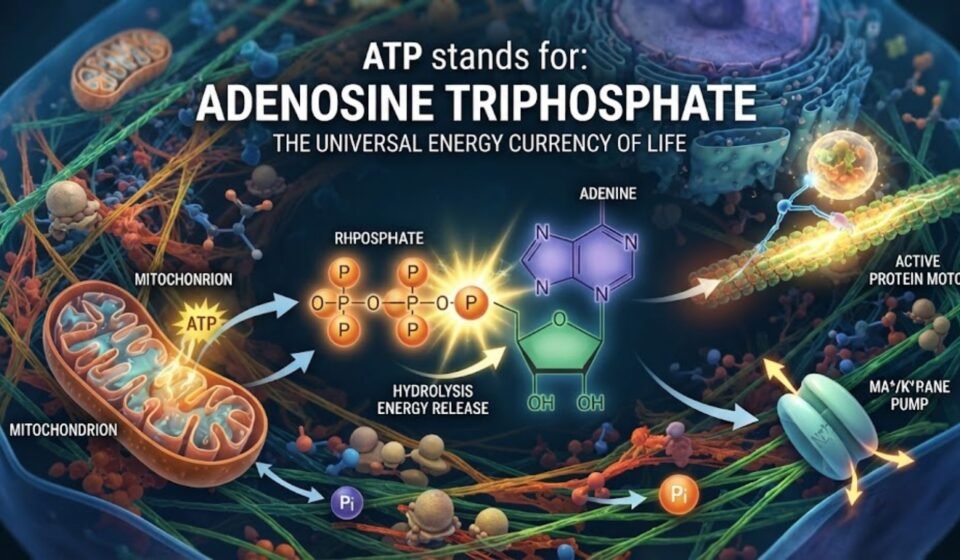
You’ve seen it pop up in a comment section or a group chat. Someone types ATP and everyone just moves on like it’s obvious. If you’re still scratching your head, you’re not alone. This guide breaks down the real ATP meaning slang, where it came from, and how people actually use it today.
ATP Meaning Slang – Quick Meaning
Let’s cut straight to it before we go any deeper.
Simple Definition
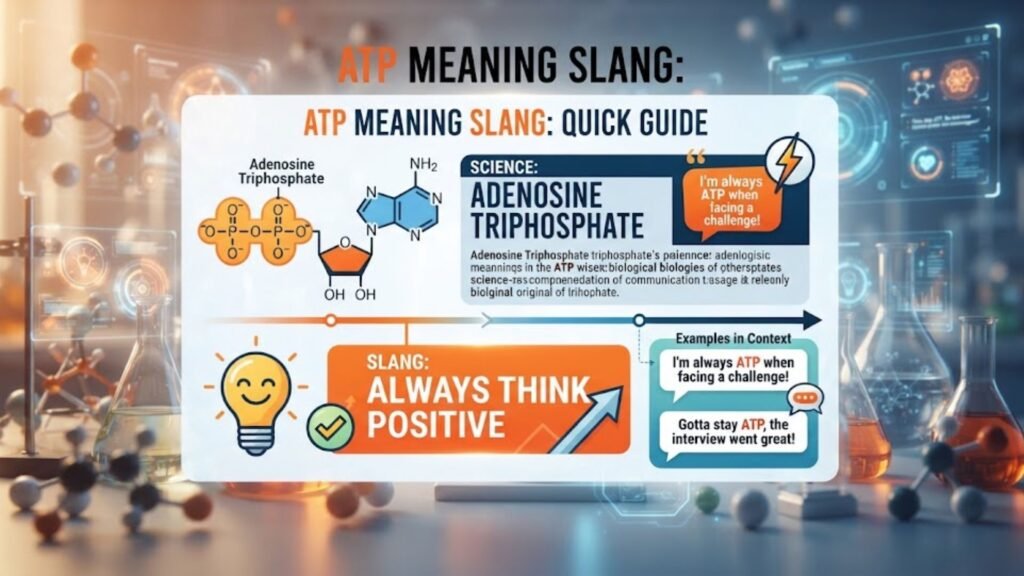
ATP meaning in slang almost always stands for At This Point. It’s a short way of saying “right now” or “given everything that’s happened.” People use it when they’ve reached a conclusion, made peace with something, or simply run out of patience.
Quick Examples
Here’s how it looks in real life:
- “ATP, I don’t even care anymore.”
- “ATP just tell me the truth.”
- “I’ve tried everything ATP, so I’m done stressing.”
Each one carries a slightly different mood, but the core idea stays the same: a person has reached a turning point.
Origin & Background
Slang like this doesn’t appear overnight. It grows out of habits people already had.
How ATP Became Popular
Texting culture trained people to shorten everything. Character limits, fast typing, and quick replies pushed phrases like “at this point” into a tidy acronym. Early text messaging culture already leaned on shortened phrases like LOL and BRB, so turning a whole sentence into three letters felt natural.
As Gen Z and younger millennials took over comment sections, ATP spread from private texts into public social media spaces, especially on TikTok and Instagram. Once a phrase gets picked up by a few viral comments, it tends to snowball fast, and that’s exactly what happened here.
Nobody can point to one single post that started it. Instead, it grew the way most online slang does: through thousands of small, repeated uses until it became familiar enough to skip explaining.
Real-Life Conversations
Reading a definition only gets you so far. Seeing ATP in action makes it click.
WhatsApp Conversation
“Are you still mad about last night?” “ATP, I just want to move past it.”
This shows acceptance. The person isn’t angry anymore; they’re ready to let it go.
Instagram DM Conversation
“He never replies on time.” “ATP I’d just stop waiting for him.”
Here, ATP signals decision making. The advice comes from a place of “enough is enough.”
TikTok Comments
Under a video about bad first dates, someone writes: “ATP I’m just staying single lol.” It’s playful, a little sarcastic, and instantly relatable to anyone scrolling through.
Text Message Conversation
“Should I text him back?” “ATP why bother, he took three days to reply.”
This is frustration speaking. The tone leans annoyed, but it’s still casual enough for a friend group chat.
Emotional & Psychological Meaning
ATP isn’t just a shortcut. It carries feeling, and the feeling shifts with context.
Frustration
When someone’s patience runs thin, ATP works like a sigh in text form. It says “I’ve had enough” without needing extra words.
Acceptance
Sometimes ATP shows a calmer side. It marks the moment someone stops fighting a situation and simply accepts where things stand.
Decision-Making
ATP often shows up right before a final decision. It’s the bridge between thinking something over and actually acting on it.
Emotional Fatigue
Long arguments, endless overthinking, or repeated disappointments can leave someone worn out. ATP becomes shorthand for “I’m mentally done with this topic.”
Usage in Different Contexts
The same three letters shift meaning depending on where and who’s using them.
Social Media
On Instagram captions or TikTok comments, ATP often adds a punchy, relatable finish to a thought, especially when the post is about relationships, work stress, or daily annoyances.
Friends & Relationships
Among friends, ATP feels natural and low stakes. It’s the kind of phrase you’d say out loud too, just faster to type.
Work or Professional Settings
Professional communication rarely welcomes slang like this. In a workplace chat or business email, it can come across as careless or unclear, so it’s best kept for casual channels only.
Casual vs Serious Tone
Tone matters more than the letters themselves. The exact same “ATP” can sound joking in one message and genuinely tired in another, depending on punctuation and context. A period after it tends to read as final, while an exclamation mark or emoji softens it into something lighter.
ATP vs Other Similar Slang Terms
It helps to see ATP next to slang it often gets grouped with.
TBH (To Be Honest) shares information with a personal opinion attached, while ATP marks a turning point after something has already happened. IMO (In My Opinion) frames a thought as one view among many, whereas ATP usually sounds more settled and final.
IDC (I Don’t Care) and SMH (Shaking My Head) lean purely emotional, showing annoyance or disbelief. ATP can carry that same frustration, but it also stretches into acceptance and decision making, which gives it more range than most single-mood texting abbreviations.
Common Misunderstandings
Slang gets messy when people assume one fixed meaning. Here’s where things go wrong.
Mistake #1: Assuming It Always Means the Same Thing
ATP can express frustration, humor, acceptance, or confidence. Reading it the same way every time leads to mixed signals.
Mistake #2: Using It in Formal Writing
Dropping ATP into an academic paper, legal document, or formal report breaks the tone completely. Slang and formal language don’t mix well.
Mistake #3: Misreading the Tone
Without facial expressions or tone of voice, a text can feel harsher than intended. What looks like anger might just be sarcasm or a joke among close friends.
When Not to Use ATP
Skip it in job interviews, client emails, or anywhere a first impression matters. Save it for chats where the vibe is already relaxed. If you wouldn’t say “at this point, I don’t care” out loud to that person, don’t type the shortened version either.
ATP Comparison Table
A quick side by side helps clear up confusion between meanings.
| Context | What ATP Usually Means | Tone |
| Texting friends | At This Point (frustration or acceptance) | Casual |
| TikTok comments | At This Point (humor or relatability) | Playful |
| Workplace chat | Rarely used, often unclear | Avoid |
| Science class | Adenosine Triphosphate (energy molecule) | Formal |
Key Insight
Context decides everything. The letters stay the same, but the meaning shifts depending on the platform, the relationship between people, and the mood of the conversation.
Variations and Types of ATP Usage
ATP bends to fit almost any emotional state. Here are ten common flavors people give it.
1. Frustrated ATP
Used when someone’s patience has run out completely.
2. Funny ATP
Added for comic effect, often paired with an exaggerated situation.
3. Relationship ATP
Shows up in conversations about dating, breakups, or mixed signals.
4. Decision ATP
Marks a clear choice, like “ATP, I’m switching jobs.”
5. Sarcastic ATP
Says one thing while meaning the opposite, usually with a joking undertone.
6. Exhausted ATP
Reflects mental exhaustion, especially after a long back and forth.
7. Supportive ATP
Used to comfort someone, as in “ATP, you’ve done all you can.”
8. Social Media ATP
Fits into captions or comments for a quick, relatable punch line.
9. Reflective ATP
Signals a moment of personal realization after thinking something through.
10. Confident ATP
Shows certainty, like someone has finally made peace with a big choice.
How to Respond When Someone Uses ATP
Replying well depends on reading the mood correctly first.
Casual Replies
Keep it light: “Fair enough” or “Yeah, I get that.”
Funny Replies
Match the energy with a joke or a meme if the tone feels playful.
Mature and Confident Replies
If someone’s made a serious decision, a simple “That makes sense, I support you” works better than jokes.
Private or Respectful Replies
For heavier topics, move the conversation to a private message instead of replying publicly.
Regional & Cultural Usage
Internet slang travels fast, but it doesn’t land the same everywhere.
Western Culture
In North America and Europe, ATP blends into everyday texting abbreviations alongside terms like TBH and IMO.
Asian Culture
Younger users in Asian online communities often mix ATP with local slang, creating a bilingual style that’s common across bilingual social media communities.
Middle Eastern Culture
In parts of the Middle East, English internet slang like ATP appears frequently among younger, English speaking users active on global platforms.
Global Internet Usage
Because platforms like TikTok and Instagram connect users worldwide, ATP keeps spreading regardless of location, turning into one of many shared pieces of global internet culture. English slang travels faster than most people realize once a hashtag or trending sound picks it up, and ATP rides that same wave.
How to Tell If ATP Fits Your Message
Before typing it, ask yourself a quick question: does this message mark a real shift in how you feel or what you’ve decided? If yes, ATP probably fits. If you’re just sharing a random thought with no buildup, it might feel forced.
Reading the message out loud before sending helps too. If “at this point” sounds natural in the sentence, the shortened version will land the same way for whoever reads it.
FAQs
What does ATP mean in slang?
It usually means At This Point, used to express a conclusion, frustration, or acceptance.
Is ATP a positive or negative slang term?
Neither by default. It can carry a positive, negative, or neutral tone depending on context.
What does ATP mean in texting?
In texts, it works the same way, marking a moment where someone has reached their limit or made a decision.
Is ATP used on TikTok?
Yes, it’s common in TikTok comments and captions, often used for humor or relatable moments.
Can ATP be used professionally?
It’s best avoided in professional communication since it reads as too casual for formal settings.
Does ATP have other meanings?
In science, ATP refers to Adenosine Triphosphate, the molecule that stores and releases energy in cells. Context makes the difference obvious.
Why do people use ATP?
It saves time, feels conversational, and fits the fast pace of digital communication.
Conclusion
ATP meaning slang boils down to one simple phrase: at this point. But how it lands depends entirely on tone, platform, and the relationship between the people talking. Once you know the pattern, spotting the mood behind it becomes second nature, whether you’re scrolling through comments or replying to a friend.

Matt Henry is a writer and researcher at Trexoleen, specializing in text meanings, slang, abbreviations, acronyms, and modern internet language. He is passionate about making confusing terms simple and easy to understand.