
You are mid conversation, everything feels normal, and then someone replies with just “wtv.” No punctuation. No emoji. Just three letters that could mean a hundred different things.
Is it rude? Is it lazy typing? Or is it just how people talk now?
If you have ever paused and reread a message trying to figure out the WTV meaning in text, you are far from alone. Millions of people search this exact phrase every month because texting slang moves fast, and one wrong read can turn a harmless reply into an awkward misunderstanding.
This guide breaks down everything you need to know about WTV, where it started, what it really means in different situations, how tone changes everything, and how to use it (or avoid it) without sounding cold or careless.
Quick Answer: What Does WTV Mean
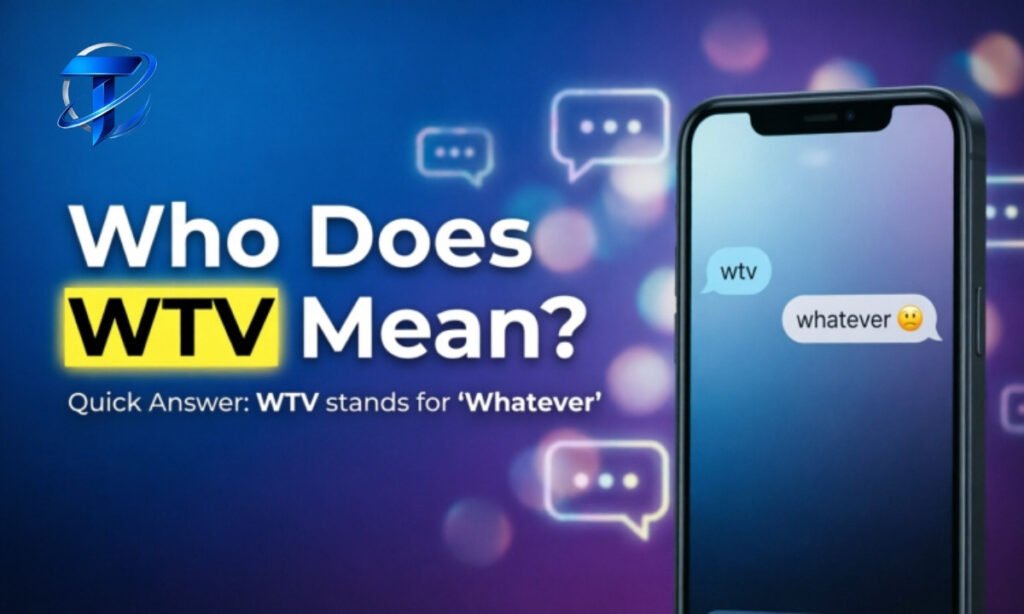
WTV is text slang for “whatever.” It is used to show indifference, agreement without much interest, or a casual way to end a topic. The real meaning depends heavily on tone, context, and the relationship between the people texting.
That short definition covers the basics, but WTV carries a lot more emotional weight than it looks. Let’s dig into why.
Where Did WTV Come From
Shortened slang like WTV did not appear overnight. It grew alongside SMS texting in the early 2000s, when character limits and slow typing speeds pushed people to cut words down wherever possible.
“Whatever” was already a common word in spoken English, especially in casual and teenage conversation. Once texting became mainstream, people naturally shortened it the same way they turned “you” into “u” or “before” into “b4.”
A few key points about its origin:
- WTV became popular during the rise of flip phone texting and early instant messaging platforms
- It carried over into AOL Instant Messenger, MSN Messenger, and later SMS chat
- Social media apps like Snapchat, TikTok, and Instagram kept it alive and pushed it into daily use
- Gen Z did not invent WTV, but this generation normalized it across nearly every messaging app
The abbreviation survived because it does something useful. It compresses a full emotional reaction into three letters, which fits perfectly with how fast modern conversations move.
Read Now : IMY Meaning in Text
What WTV Really Means in Different Situations
WTV is one of those slang terms where the letters never change, but the meaning shifts completely based on context. Here is a simple breakdown.
| Situation | Example Message | What It Likely Means |
| No real preference | “Pizza or tacos?” “wtv, either works” | The person genuinely does not mind |
| Mild irritation | “You never texted back.” “wtv” | Slight annoyance, avoiding an argument |
| Ending a conversation | “Can we talk later?” “wtv” | Emotional distance or disinterest |
| Playful or teasing | “You’re so dramatic lol” “wtv 😂” | Light, friendly, joking tone |
| Passive disagreement | “I already decided.” “wtv then” | Reluctant acceptance, not fully happy |
The word itself never carries a fixed emotion. It borrows its tone from everything around it, the punctuation, the emoji, the timing of the reply, and the history between the two people texting.
Is WTV Rude or Friendly
This is the question most people are really asking when they search for the WTV meaning in text.
The honest answer is that WTV is neither rude nor friendly by default. It is neutral until context adds emotion to it.
Here are the clues that usually reveal the real tone:
- Response speed – An instant “wtv” tends to feel dismissive, while a slower reply often signals genuine indifference rather than anger
- Punctuation – “wtv.” with a period can read as cold, while “wtv lol” or “wtv 😅” softens it instantly
- Message length before it – If the conversation was already tense, “wtv” usually confirms frustration
- Relationship type – Close friends can toss “wtv” around casually, while the same word from a partner during an argument often signals shutdown
A simple rule many people use: if the rest of the conversation was calm, WTV is probably calm too. If the conversation was already heated, WTV usually means the person is done arguing, not that they suddenly stopped caring.
Read Now : CMP Meaning in Text
WTV vs Similar Texting Slang
People often confuse WTV with other short forms that carry a different meaning. Mixing these up is one of the most common texting mistakes.
| Abbreviation | Meaning | Tone |
| WTV | Whatever | Neutral, can shift with context |
| IDC | I don’t care | Usually more blunt and direct |
| IDK | I don’t know | Uncertainty, not indifference |
| WBU | What about you | A question, not a dismissal |
| NVM | Never mind | Dropping the topic entirely |
| K | Okay | Can feel short or annoyed |
Knowing this difference matters because replying “idc” instead of “wtv” can come across far more harsh, even though people often use them interchangeably without thinking.
How to Use WTV the Right Way
If you want to use WTV without sending the wrong message, a little intention goes a long way.
- Add a soft word after it, such as “wtv works” or “wtv you decide”
- Use an emoji to signal friendliness, like 😅, 🤷, or 😂
- Avoid using it right after a serious question someone asked with real intent
- Save it for low stakes decisions, not emotional conversations
- Pair it with a follow up sentence if you actually do have a slight preference
A message like “wtv, I’m easy either way” reads completely different from a plain “wtv” sent alone. The extra few words remove almost all the guesswork for the person reading it.
WTV Across Different Apps in 2026

The core meaning of WTV stays the same everywhere, but the way it feels can shift slightly depending on the platform.
Snapchat Conversations disappear quickly and move fast, so WTV shows up constantly as a quick, low effort reply between friends.
TikTok WTV appears often in comment sections and direct messages, usually in a joking or sarcastic tone rather than a serious one.
Instagram Used in both DMs and comment replies, WTV on Instagram tends to lean casual and friendly, especially between close contacts.
Discord In gaming and community servers, WTV is used constantly to signal that someone does not care which option the group picks, especially during quick decision making.
WhatsApp and iMessage These platforms are used for more personal, one on one conversations, so WTV here carries slightly more emotional weight than on public social apps.
Read Also : SMT Meaning in Text
What’s New About WTV in 2026
Texting culture keeps shifting every year, and a few real changes are worth knowing right now.
- AI chat assistants and predictive text tools have started suggesting “wtv” as an auto reply option in casual message threads, which is speeding up how often it appears in everyday conversations
- Voice to text features on most phones now convert spoken “whatever” directly into typed “wtv” in casual messaging apps, blending spoken slang with typed slang more than before
- Younger users increasingly pair WTV with short reaction emojis instead of full sentences, making tone reading even more important than the word itself
- Workplace messaging apps used by younger employees are seeing more casual slang bleed into semi formal chats, which means WTV is showing up in places it never used to, like informal work Slack threads
These shifts show that WTV is not fading out. If anything, it is becoming more embedded into everyday digital communication across more platforms than before.
When You Should Avoid Using WTV
There are a few situations where WTV can genuinely work against you.
- Professional emails or workplace communication with clients or managers
- Serious conversations involving feelings, relationships, or conflict resolution
- Messages to someone you do not know well, since they cannot read your usual tone
- Any moment where the other person is clearly asking for a real, thoughtful answer
In these cases, swapping WTV for a full phrase like “either option works for me” or “I don’t have a strong preference” keeps the message clear and avoids sounding careless.
Frequently Asked Questions
What does WTV mean in a text message?
WTV stands for “whatever.” It is used to show indifference, casual agreement, or a wish to move past a topic without much discussion.
Is WTV the same as IDC?
Not exactly. WTV feels more flexible and neutral, while IDC (“I don’t care”) usually sounds more blunt and direct, even if both point toward indifference.
Is it rude to say WTV to someone?
Not by default. WTV only feels rude when the surrounding context, punctuation, or timing makes it sound dismissive. On its own, it is a neutral abbreviation.
Can WTV be used in a flirty way?
Yes. Between people who already have a playful dynamic, WTV paired with a laughing emoji or teasing follow up message can read as lighthearted rather than dismissive.
Should I use WTV in work messages?
Generally no. WTV is casual slang, so it is best kept for friends, family, and informal chats rather than professional or formal communication.
Final Thoughts
WTV is a small word carrying a lot of emotional flexibility. At its core, it simply means “whatever,” but the real message hides in tone, timing, and the relationship between the people texting.
Read the full conversation before deciding how to feel about it, use extra words or emojis when you want to be understood clearly, and save it for casual chats rather than serious or professional ones. Once you understand how context shapes it, WTV stops being confusing and starts being just another normal part of everyday texting.

Matt Henry is a writer and researcher at Trexoleen, specializing in text meanings, slang, abbreviations, acronyms, and modern internet language. He is passionate about making confusing terms simple and easy to understand.

[…] Read Now : WTV Meaning in Text […]