
Texting has its own language, and one of the most common shorthand terms people run into is “js.” It looks simple, but it carries more emotional weight than most people realize. If you have ever paused mid conversation wondering whether “js” was friendly, sarcastic, or a hint at something technical, this guide clears it up completely.
What Does JS Mean? (Quick Answer)
JS most commonly means “just saying” in text messages, social media, and online chats. It is used at the end of a sentence to soften an opinion, share a casual thought, or reduce the chance of sounding harsh. In technology conversations, JS instead refers to JavaScript, a programming language used to build websites and apps.
That two line answer covers the basics, but understanding when and why people use each meaning takes a bit more context. Let’s break it down properly.
Where JS Comes From
Text abbreviations grew out of necessity. Early SMS plans limited character counts, and typing on small keypads was slow, so people shortened everything they could. “Just saying” became “js” the same way “laughing out loud” became “lol” and “be right back” became “brb.”
As instant messaging and social platforms took over, these shortcuts stuck around not because typing space was still limited, but because they had become part of casual digital culture. Gen Z and younger millennials kept the habit alive, and “js” is now a permanent fixture in texting, comment sections, and group chats.
Read Also : MMCHT Meaning in Text
The Two Main Meanings of JS
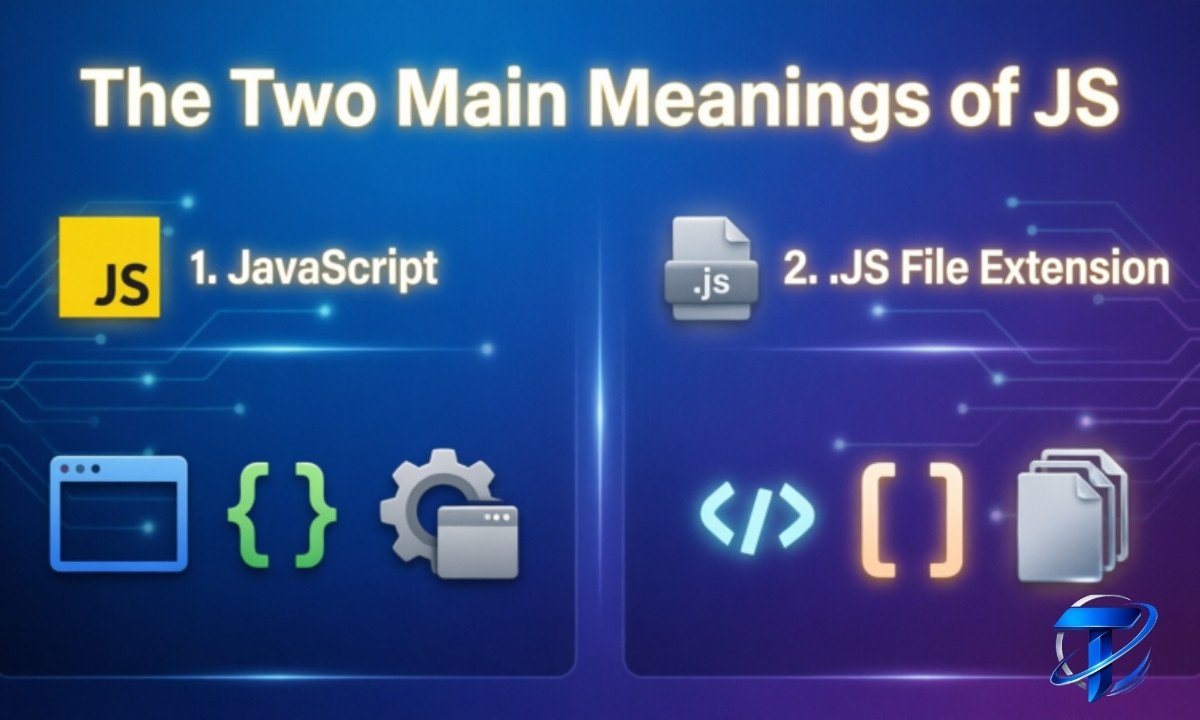
JS is not a term with one fixed definition. Its meaning shifts entirely based on where you see it. Here are the two meanings you will run into most often.
1. JS as “Just Saying”
This is the meaning almost everyone means when texting a friend, replying to a comment, or posting a caption. It works like a verbal shrug, a way of putting an opinion out there without demanding a reaction.
Example: “That restaurant was kind of overpriced, js.”
Here, the sender is sharing an honest opinion but softening it so it does not sound like a complaint or a direct criticism.
2. JS as “JavaScript”
In coding forums, developer chats, and tech support threads, JS almost always means JavaScript, one of the most widely used programming languages in web development. A message like “can you check the js file on the homepage” has nothing to do with texting slang. It is purely technical shorthand.
JS Meaning Table: Quick Reference
| Context | Likely Meaning | Example |
| Texting with friends | Just saying | “You should’ve called first, js” |
| Social media captions | Just saying | “This dress was a steal, js” |
| Developer or coding chat | JavaScript | “Fix the js bug on checkout” |
| Group chat with mixed audience | Depends on topic | Read the surrounding messages |
| Sneaker culture (less common) | Air Jordans | “Copped new Js today” |
| Formal or academic settings | Junior School (regional use) | “JS students report to hall 2” |
Why Context Decides Everything
There is no single official expansion of “js” because slang does not work like a dictionary term, it evolves through use. The surrounding conversation is what tells you which meaning applies.
A simple way to check yourself:
- If the chat is about code, apps, bugs, or websites, think JavaScript.
- If the chat is casual, personal, or opinion based, think “just saying.”
- If neither fits, look at who is talking. Sneaker communities, regional school systems, and niche group chats sometimes use JS differently.
Read Also : Hyy Meaning in Text
Why People Use JS So Often
“Just saying” existed as a spoken phrase long before texting turned it into three letters. People use it because it does something useful in conversation: it lowers the emotional stakes of a statement.
Common reasons people add JS to a message:
- To share an honest opinion without sounding bossy
- To make advice feel optional instead of forced
- To add light humor or sarcasm to a comment
- To close a statement without inviting an argument
- To sound casual rather than confrontational
Psychologically, tacking on “js” gives the sender a small exit. It signals “take it or leave it,” which reduces the pressure on both sides of the conversation.
When JS Can Feel Passive Aggressive
Here is where things get tricky. On paper, “just saying” sounds neutral and even friendly. In practice, tone and placement change everything.
Adding “js” right after criticism rarely softens it the way people intend. A message like “Your presentation was a bit messy, js” still reads as a jab, no matter how casually it is typed. The abbreviation does not erase the sting, it just adds a thin layer of deniability.
Situations where JS tends to backfire:
- After criticism aimed at someone’s work, appearance, or choices
- During an already tense or emotional conversation
- When repeated in nearly every message, which starts to feel like a verbal tic
- In formal writing, official emails, or professional documents
JS in 2026: What Has Changed
Texting slang keeps shifting, and a few updates are worth knowing heading into 2026.
AI powered messaging suggestions now recognize JS as slang, not just JavaScript. Predictive text and smart reply tools on major platforms have gotten better at reading context, so autocorrect is less likely to “fix” it into something unrelated the way it sometimes did a few years ago.
Workplace chat culture has loosened up. Slack and Teams conversations among younger coworkers now use casual abbreviations like js more freely than they did even two or three years ago, especially in relaxed or creative workplace cultures. It is still risky in client facing emails, but internal chats are far more forgiving than before.
Voice to text and AI chat assistants sometimes generate JS unintentionally. As more people dictate messages or let AI drafting tools suggest replies, “js” occasionally appears in generated text as a natural filler phrase, which means it is spreading beyond typing habits alone.
Cross platform consistency has increased. A few years ago, JS carried slightly different weight on Snapchat compared to Instagram DMs or iMessage. In 2026, usage has become more uniform across platforms, largely because slang spreads faster through short video captions and comment sections shared everywhere at once.
How to Use JS Correctly
If you want to use JS naturally without sounding stiff or accidentally offending someone, keep a few habits in mind.
- Save it for casual, low stakes conversations.
- Avoid pairing it directly with criticism unless you know the other person well.
- Do not overuse it in a single conversation, it loses its softening effect fast.
- Skip it entirely in professional emails or formal writing.
- When talking to someone unfamiliar with slang, spell it out as “just saying” instead.
How to Respond When Someone Sends You JS
Your reply should usually match the tone of the message. If it reads as light and friendly, respond casually. If it feels pointed or sarcastic, you can either let it go, ask a clarifying question, or address the underlying comment directly instead of reacting to the abbreviation itself.
A calm response like “fair point” or “noted, thanks for saying” works in most situations and keeps the conversation moving without escalating anything.
JS vs Similar Texting Abbreviations
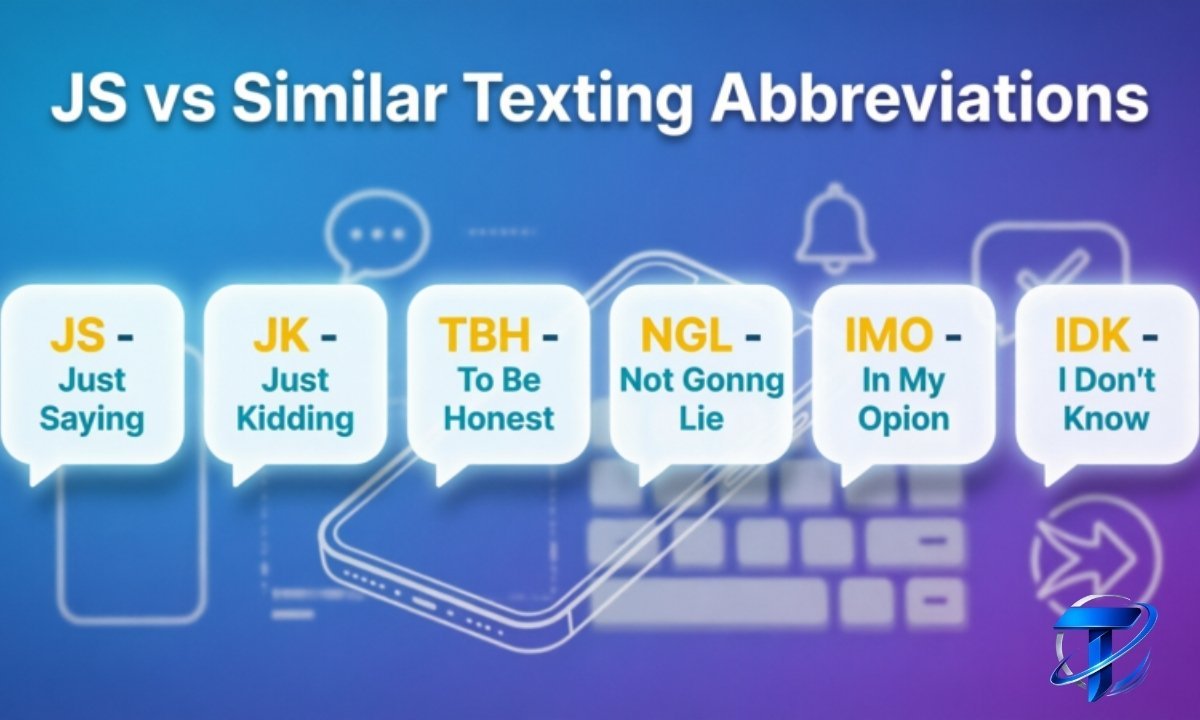
JS is often grouped with other short opinion markers, but each one carries a slightly different tone.
| Abbreviation | Meaning | Typical Use |
| JS | Just saying | Softens an opinion at the end of a sentence |
| IMO | In my opinion | Introduces a personal view upfront |
| TBH | To be honest | Signals sincerity before a statement |
| FYI | For your information | Shares a fact, not an opinion |
| NGL | Not gonna lie | Admits something candidly, often blunt |
Knowing these differences helps you read tone correctly across different chats and pick the right one when writing your own messages.
Common Mistakes People Make With JS
- Assuming it always means JavaScript, even in a clearly casual chat
- Reading sarcasm into a message that was meant genuinely
- Ignoring the surrounding conversation before deciding what it means
- Using it in formal emails where it looks unprofessional
- Overusing it until every message ends with the same tag
Frequently Asked Questions
What does JS mean in a text message?
In most texting and social media contexts, JS stands for “just saying.” People use it to share an opinion or observation casually, without sounding too forceful or argumentative.
Does JS always mean JavaScript?
No. JS only means JavaScript in technical or coding related conversations, such as developer chats, coding tutorials, or bug reports. In everyday texting, it almost always means “just saying.”
Is JS rude or passive aggressive?
It depends entirely on context. JS is usually neutral or friendly, but when paired directly with criticism or used repeatedly in one conversation, it can come across as passive aggressive.
Is it okay to use JS in professional messages?
It is best avoided in formal emails or official communication. Some relaxed workplace chats among close coworkers may tolerate it, but professional writing should stick to full phrases like “just my opinion” or “just a suggestion.”
What is a good alternative to JS?
Depending on the tone you want, IMO (in my opinion), TBH (to be honest), or simply spelling out “just saying” all work as clear, easy to understand alternatives.
Why do people use JS instead of typing the full phrase?
It is faster to type, feels casual, and softens an opinion without requiring extra words. It has become a habit carried over from early texting culture where character limits mattered.
Final Thoughts
JS is a small abbreviation that carries a surprising amount of nuance. In casual texting, it almost always means “just saying,” a gentle way to voice an opinion without sounding harsh. In technical conversations, it switches entirely to mean JavaScript. The real skill is not memorizing the definition, it is reading the context around it.
Once you get comfortable doing that, you will never second guess a text ending in “js” again.

Matt Henry is a writer and researcher at Trexoleen, specializing in text meanings, slang, abbreviations, acronyms, and modern internet language. He is passionate about making confusing terms simple and easy to understand.


[…] Read Also : JS Meaning in Text […]