
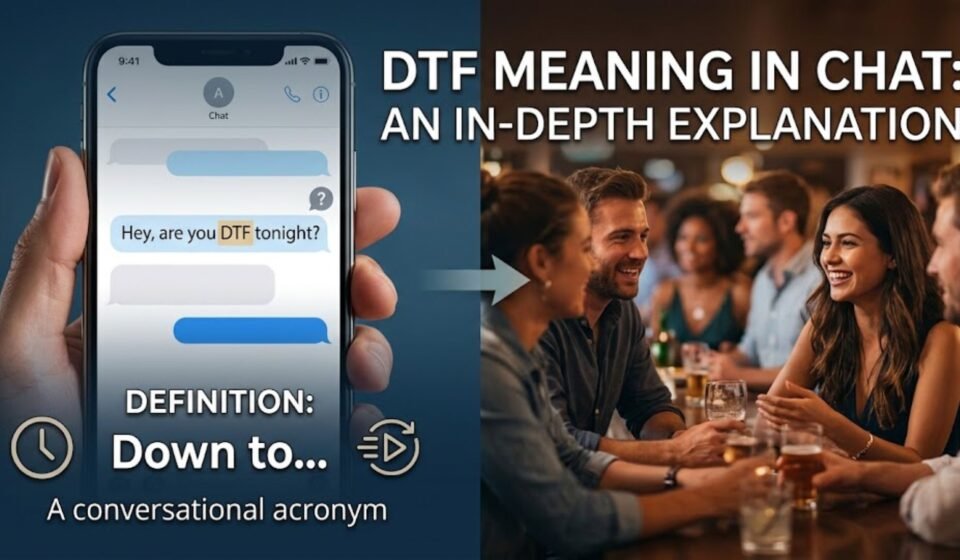
You saw it in a text. Maybe on Snapchat, maybe in a group chat, maybe from someone you just matched with. Three letters, one big question mark over your head: what does DTF mean?
Here’s the short answer before we go deep: DTF stands for Down To F*, a piece of internet slang used to signal that someone’s open to a casual encounter or hooking up. It’s blunt, it’s modern, and it shows up everywhere from dating apps to random DMs. Now let’s unpack every angle of it, so you’re never caught off guard again.
DTF Meaning in Text
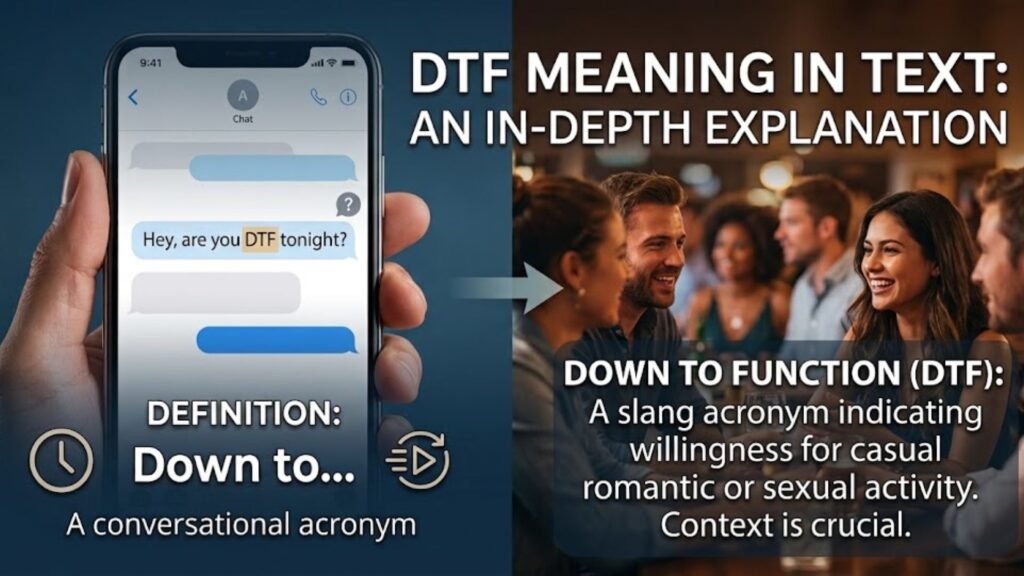
In texting, DTF usually means someone is signaling interest in a sexual encounter without any of the small talk. It’s a shortcut. Instead of typing out a full sentence, people drop the acronym and let the context do the rest.
You’ll mostly catch it in private messages or direct messages, not in a formal email or a work Slack thread. Think late-night texts, flirty group chats, or a reply to a suggestive photo. The tone is casual, sometimes joking, sometimes dead serious.
What makes DTF tricky is that meaning in text depends heavily on who sent it and why. A close friend might toss it around as a joke. A stranger on a dating app might mean it word for word.
DTF Slang Meaning
As slang, DTF has drifted a bit from its raw definition. Sure, the DTF sexual meaning is still the backbone of it, but plenty of people now use it loosely, almost like a punchline.
You’ll spot it in meme captions, comment sections, and reaction videos where nobody’s actually propositioning anyone. It’s become one of those terms that carries weight even when it’s used sarcastically, which is part of why it confuses so many people.
The DTF slang meaning you settle on really comes down to reading the room. Is this a flirty exchange between two people who’ve been talking for weeks? Or is it a random comment slapped under a funny TikTok? Context does all the heavy lifting here.
What Does DTF Mean in Chat?
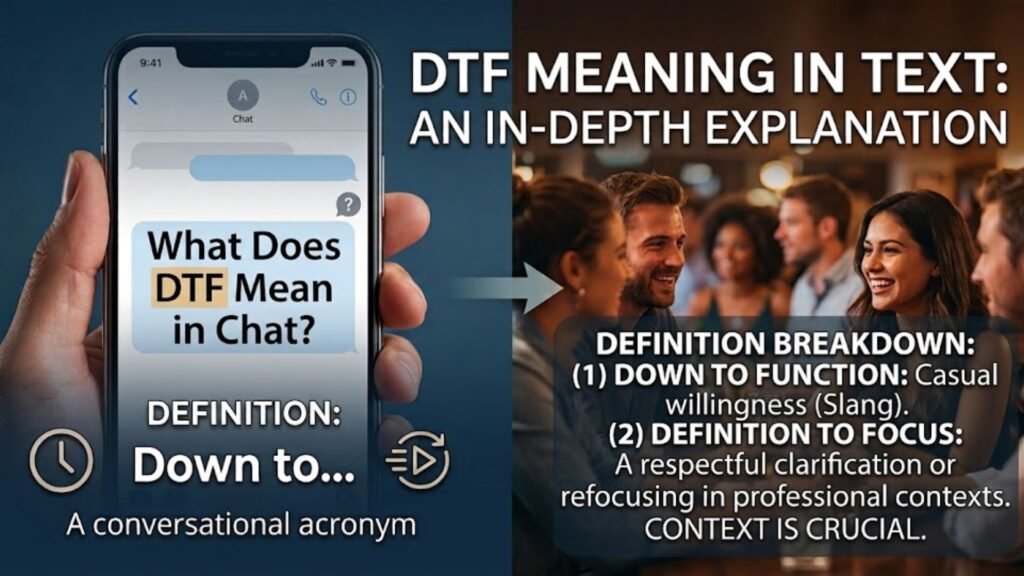
Online chat and texting aren’t always the same animal. In group chats especially, DTF meaning in chat often gets used as a tease rather than an actual invitation.
Picture this: your friend posts a blurry gym selfie, and someone replies “DTF? 😂” It’s not a real question. It’s a joke riding on the acronym’s reputation, poking fun at how overused the term has become.
That said, in private chats between two people who are into each other, DTF keeps its original punch. It’s a fast way to check if both sides are on the same page before things go further. No fluff, just a direct read on interest.
Is DTF an Acronym or Slang?
This one trips people up constantly. Technically, DTF is both. It started life as a straightforward acronym, and over time, internet culture folded it into everyday slang term territory.
Acronym
As an acronym, DTF simply stands for three specific words strung together. It functions like any other text abbreviation, built to save time and keystrokes. No hidden meaning, no wordplay, just letters standing in for a phrase.
Slang Term
As a slang term, DTF has picked up flexibility. People bend it, joke with it, and repurpose it outside its literal definition. That’s how slang evolves. It starts as a shortcut and ends up as a cultural reference point everyone recognizes on sight.
DTF Meaning Across Social Media Platforms
Not every platform treats DTF the same way. The DTF meaning shifts slightly depending on where you’re reading it, so let’s break it down by app.
DTF Meaning on Snapchat
On Snapchat, DTF shows up a lot in private snaps and disappearing messages, which honestly makes sense. The whole app is built around content that vanishes, so it’s a natural spot for bold, direct messaging. You’ll see it less in Snapchat stories since those are more public.
DTF Meaning on TikTok
TikTok treats DTF more like a punchline than a real proposition. It pops up in comment jokes and captions under videos that have nothing to do with dating. The humor usually comes from the mismatch between the term’s serious meaning and the harmless video it’s attached to.
DTF Meaning on Instagram
On Instagram, you’ll mostly find DTF tucked into Instagram DMs rather than comments on public posts. People keep it private here, which lines up with how the platform separates public content from personal conversations.
DTF Meaning on WhatsApp
WhatsApp leans more personal since most chats there happen between people who already know each other. DTF on this app tends to carry real weight, since it’s rarely a stranger typing it. It’s usually part of an ongoing, familiar conversation.
DTF Meaning in SMS Text Messages
Plain old SMS text messages don’t see DTF nearly as often anymore. Most of this kind of talk has migrated to apps with more privacy features. When it does show up in SMS, it’s almost always between two people who already have some history.
Tone and Context Variations
Tone and intent change everything about how DTF lands. The same three letters can read as funny, awkward, or completely serious depending on delivery.
Funny Tone
Used with a laughing emoji or in response to something absurd, DTF becomes a joke. Nobody’s actually propositioning anyone. It’s humor, plain and simple, riding on shock value.
Sarcastic Tone
Sarcasm flips the term on its head entirely. Someone might type “so DTF” right after describing doing laundry, mocking how overused the phrase has become in casual chats.
Romantic Tone
In a genuinely flirty exchange, DTF can carry real romantic context. It signals interest without any of the awkward buildup, though it still needs mutual comfort to land well.
Angry Tone
Occasionally, DTF gets weaponized in arguments, almost like an insult or a jab. This usage is rare but does happen in heated exchanges where someone’s trying to provoke a reaction.
Playful Tone
A playful tone sits somewhere between funny and flirty. It’s teasing, light, and usually between people who already have an easy rapport.
15 Real Chat Examples of DTF
Seeing DTF in action clears up a lot of confusion. Here are real-style text message examples covering different situations:
- “u up? dtf?” — a late-night, direct message
- “lol he really said dtf after one date 💀” — gossip between friends
- “not rn, tired asf” — a not interested reply
- “dtf tonight or nah” — a dating app conversation opener
- “bro said dtf to a pizza emoji” — a joke in a group chat
- “we’re def dtf this weekend” — planning between an established couple
- “idk why everyone thinks dtf is funny now” — commentary on the trend
- “she left me on read after i said dtf” — a cautionary tale
- “dtf but only if you bring snacks 😂” — a playful twist
- “is that dtf or are you just hungry” — a joke about the acronym’s overuse
- “not comfortable with that, let’s slow down” — a direct response
- “dtf energy only, no cap” — describing someone’s vibe
- “he asked dtf and i just left him on delivered” — a short response story
- “we matched and he opened with dtf 🙃” — a dating apps anecdote
- “dtf for tacos, that’s it” — a joke stripped of any real meaning
Grammar and Language Role
DTF might look simple, but it plays a specific role inside a sentence, and understanding that helps you use it correctly.
Part of Speech
Functionally, DTF works as an adjective. It describes a state of willingness or interest, similar to how you’d use “ready” or “open.”
Sentence Role
Most often, DTF shows up as part of a question, asking whether someone shares that same interest. It rarely stands as a statement on its own without context around it.
Sentence Position
You’ll typically find it at the start or end of a full message, rarely buried in the middle. That positioning keeps it punchy and easy to spot at a glance.
Formal vs Informal Usage
DTF belongs firmly in informal language. It has zero place in formal messaging, professional emails, or anything resembling workplace communication.
How to Reply When Someone Says “DTF”
Getting this text can catch you off guard, so having a plan for your reply helps keep the conversation on your terms.
Funny Replies
A joke response can defuse the moment without shutting things down completely. Something like “only if you bring snacks” keeps it light and playful.
Serious Replies
If you’re genuinely interested, a direct response works best. Skip the games and just say where you stand, clearly and without confusion.
Flirty Replies
Flirty replies keep the tension going without fully committing either way. They’re great for testing the waters before deciding your next move.
Neutral Replies
A neutral reply simply buys you time or shifts the topic. “Haha we’ll see” is vague enough to not commit to anything while still keeping things friendly.
Is DTF Rude or Bad?
This depends entirely on context and consent between the people talking.
Is DTF rude?
Between two consenting adults who both understand the term, DTF isn’t inherently rude. It becomes a problem when it’s sent to someone who hasn’t invited that kind of conversation.
Is DTF a bad word?
DTF isn’t a curse word, but it does reference sexual activity directly. That makes it inappropriate for a lot of settings even if it’s not technically profane.
Can you use DTF in school?
No. School environments call for appropriate language, and DTF has no place in school assignments, classroom chats, or anything tied to educational settings.
Can you use DTF at work?
Also no. Workplace appropriateness rules out this term completely. It has zero business in professional messaging or any work communication.
Who Uses This Term?
DTF isn’t tied to one group, but usage patterns do lean a certain way.
Age Groups
Gen Z and younger Millennials use DTF most often, largely because they grew up inside texting and social media culture where shorthand rules everything.
Regions
You’ll hear it most in the United States, United Kingdom, Canada, and Australia, basically anywhere English-speaking countries dominate online slang trends.
Platforms Where It’s Most Common
Dating apps and private messaging apps see the heaviest use. Public platforms tend to treat it more like a joke than a genuine signal.
Origin and Internet Culture
DTF has roots stretching back to early reality TV and pop culture, where blunt hookup talk first went mainstream. From there, it spread through forums and early internet culture before memes picked it up and ran with it.
Once meme culture got involved, the term stopped being purely literal. It became a reference, a punchline, something people quote without meaning it word for word. That shift is exactly why DTF confuses so many people today.
Comparison With Similar Internet Slang
DTF sits in a crowded lineup of shorthand terms, but it’s not quite like the others.
- IDK means “I don’t know,” totally unrelated to intent or interest.
- ION stands for “I don’t know,” a newer, trendier cousin of IDK.
- IDC signals “I don’t care,” used to shrug off a topic.
- WYM asks “what you mean,” clarifying a confusing message.
- UNC is slang describing someone acting older or out of touch.
Unlike these terms, DTF carries sexual interest baked directly into its meaning. That’s what separates it from casual text abbreviations like the ones above.
Real-World Chat Insight
Talk to anyone active on dating apps, and they’ll tell you DTF works best as an icebreaker only when both people already sense mutual interest. Sent cold, it usually lands badly and gets ignored.
People who use it well tend to build a little rapport first. A joke, a compliment, some back and forth, then the term slides in naturally instead of landing like a demand. That’s the real skill behind using slang like this without coming off tone-deaf.
FAQs
What Does DTF Mean in Text Messages and Online Chat?
It means someone’s signaling they’re down to have sex, usually in a casual, low-effort way through texting or online chat.
What Does DTF Mean on Snapchat and TikTok?
On Snapchat, it’s often literal and private. On TikTok, it’s usually a joke in comments or captions, far from any real proposition.
Is DTF Rude, Disrespectful, or Harmless Slang?
It depends on consent and context. Between two people who both understand and welcome it, it’s harmless. Sent without invitation, it can feel disrespectful.
How Should You Reply When Someone Says “DTF”?
Reply however matches your actual comfort level, whether that’s a joke, a clear yes, a flirty tease, or a firm no thanks.
Is DTF the Same as IDK or Different?
Completely different. IDK means “I don’t know.” DTF carries sexual interest, nothing close to a shrug of uncertainty.
Can You Use DTF in School or Work?
No, in either setting. Both call for respectful communication free of adult slang.
Final Thoughts
DTF isn’t complicated once you strip away the confusion around tone and context. It’s a fast, blunt piece of internet slang built for casual, private conversations, not something that belongs in formal spaces. Read the room, check your comfort level, and you’ll never be caught off guard by three letters again.

Matt Henry is a writer and researcher at Trexoleen, specializing in text meanings, slang, abbreviations, acronyms, and modern internet language. He is passionate about making confusing terms simple and easy to understand.