
“Tralalero Tralala” doesn’t mean anything in the dictionary sense. It’s a playful nonsense phrase, closer to “la la la” than an actual word. People use it to sound carefree, dodge a serious question, or just add some silliness to a chat.
That’s the short answer. Now let’s get into why this odd little phrase took over everyone’s feed.
Tralalero Tralala Meaning – Quick Definition
Simple Meaning
At its core, “Tralalero Tralala” is a string of musical filler sounds. Think of it as a vocal shrug, something you hum when words feel like too much effort.
It carries indifference more than any fixed message. People drop it into a chat the same way they’d say “whatever” or “meh,” just with more rhythm.
Example Uses
Someone might text “tralalero tralala” instead of answering a question they’d rather skip. Others use it purely for laughs, tossing it into a caption or comment for that playful nonsense effect.
- “You still owe me $20.” “Tralalero tralala, never heard of it.”
- Captioning a chaotic gym fail video with “tralalero tralala” and nothing else
- Replying to a nosy question with just the phrase, no explanation attached
Origin & Background
The phrase blew up in early 2025 as part of the AI-generated “Italian brainrot” meme wave. An internet slang clip featuring an exaggerated, robotic Italian-sounding voice chanting the phrase spread fast on TikTok.
The audio paired the nonsense chant with random complaints, delivered in a loud, theatrical tone that made it instantly quotable. It wasn’t scripted by a comedian or a musician. It came out of AI tools built to churn out absurd, shareable clips.
That’s actually part of why it spread so fast. Nobody owned the joke, so anyone could remix it without stepping on toes. Grab a random group chat and someone’s probably already sent this exact audio as a voice note, half as a joke, half because it’s just catchy.
Evolution Over Time
What started as a random sound bite quickly grew a visual identity. Creators attached the audio to an odd shark character, and the combo turned into a full internet culture phenomenon.
From there, it split into remixes, translated versions, and reaction videos across dozens of platforms. The tralalero vibe stuck around because it’s flexible. You can slap it onto almost any clip and it somehow fits.
Musicians and comedy accounts jumped in next, layering the chant over beats or using it as a punchline in longer skits. That’s the pattern with most internet slang. It starts small, gets remixed a hundred ways, and eventually turns into shorthand everyone just understands.
Real-Life Conversations (How People Actually Use It)
Seeing it in context makes the meaning click faster than any definition could.
WhatsApp Chat
“Bro are you coming tonight or not” “Tralalero tralala 😂” “So that’s a no”
Instagram DM
“Did you actually fail the quiz” “tralala… we don’t talk about that”
TikTok Comments
“POV: your alarm goes off at 6am” gets a comment reading “tralalero tralala, back to sleep.” It works as a punchline without needing extra words.
Text Message
“Where were you at 2am” “tralalero tralala 🦈”
The carefree energy comes through even in a single line. No paragraph needed, no real answer given, just vibes.
Emotional & Psychological Meaning
There’s more going on under the humor than most people realize.
It Often Reflects
Using this phrase can signal avoidance, a way of dodging an uncomfortable topic without outright ignoring someone. It can also just be a burst of lightheartedness, nothing deeper than wanting to keep things fun.
In heavier moments, it acts as humor under pressure, a way to laugh instead of spiral. Psychologists who study internet slang point out that nonsense phrases like this give people a low-stakes way to release stress without sounding dramatic about it.
There’s also a small rebellious streak in it. Saying something meaningless on purpose pushes back against the pressure to always have the right words ready. Think of it as a tiny act of carelessness, on purpose, in a world that usually expects a quick, polished answer to everything.
Usage in Different Contexts
Context changes everything about how this phrase lands.
Social Media
On social media, it thrives as a caption, a comment, or a reaction to chaos. It fits naturally next to emojis and short clips, adding a wink of irony without much effort.
Friends & Relationships
Between friends, it’s mostly teasing. One person avoids a question, the other laughs it off, and nobody actually gets mad.
Work or Professional Settings
This one’s simple: don’t. Professional communication calls for actual words, and dropping meme slang in emails or meetings reads as unprofessional, even if you meant it as a joke.
Casual vs Serious Tone
The phrase only works in a casual tone. Drop it into a serious conversation and it can come off as dismissive, even if that’s not what you meant.
Reading the room matters more than the phrase itself here. A joke that lands perfectly in a group chat can feel careless if someone just told you something that’s actually bothering them.
Common Misunderstandings
A few myths keep floating around about this phrase, so let’s clear them up.
It Always Means Something Deep
It doesn’t. Most of the time it’s just playful nonsense, nothing hidden behind it.
It’s Always Positive
Not quite. Depending on tone, it can carry sarcasm or even mild passive-aggressive behavior.
It’s Appropriate Everywhere
Definitely not true. Save it for casual conversations, not client calls.
When NOT to Use It
- During a genuine apology or emotional conversation
- In formal writing, resumes, or cover letters
- When someone is actually asking for help, not just chatting
Comparison Table
| Expression | Vibe | Best Used For |
| Tralalero Tralala | Silly, dismissive | Joking, dodging questions |
| Whatever | Flat, sometimes cold | Ending an argument |
| YOLO | Bold, impulsive | Justifying a risky choice |
| La la la | Innocent, avoidant | Blocking out bad news |
Key Insight
“Tralalero Tralala” sits closer to YOLO and whatever in spirit, but it carries way more playfulness and far less edge.
Variations / Types
The phrase isn’t locked into one spelling or delivery. You’ll spot it as “tralala,” “tra-la-la,” or stretched out into “tralalalala” depending on how dramatic someone’s feeling.
Some people pair it with a tralalero vibe shrug emoji, others sing it out loud in voice notes. There’s also the shortened “tralala mood,” used almost like a status update for “I’m not dealing with this today.”
A few creators have built entire bits around a “tralala lifestyle,” treating it like a whole personality of not sweating small stuff. Others keep it simple, using it once in a caption and moving on, which honestly fits the phrase’s whole point better.
How to Respond When Someone Uses It
Not sure how to reply when someone drops it on you? Here’s the breakdown.
Casual Replies
“Lol fair enough” or just mirroring it back with “tralala” works fine.
Funny Replies
Escalate the bit: “tralalero tralala, ask the shark” keeps the joke rolling.
Mature / Confident Replies
“Nice dodge, but I still need an answer” calls it out without killing the mood.
Respectful Replies (Private Conversations)
If the topic actually matters, gently ask again in plain words instead of playing along.
Regional & Cultural Usage
Western Culture
In the US and UK, it’s mostly a comedy tool, big on TikTok captions and group chat banter.
Asian Culture
Across parts of Asia, translated memes gave it fresh subtitles and new punchlines while keeping the same tralala energy.
Middle Eastern Culture
Creators here leaned into the absurdity too, often remixing the audio with local jokes and online humor trends.
Global Internet Usage
Language barriers barely slowed it down. The sound itself carries the joke, so translated memes popped up everywhere within weeks. That’s the real trick behind it. You don’t need to speak Italian, or any language really, to get why it’s funny.
Younger, internet savvy audiences in particular treated it like a shared inside joke that skipped past borders entirely. It’s one of the rare bits of online humor that traveled without needing a single word changed.
Where the Tralalero Tralala Shark Fits In
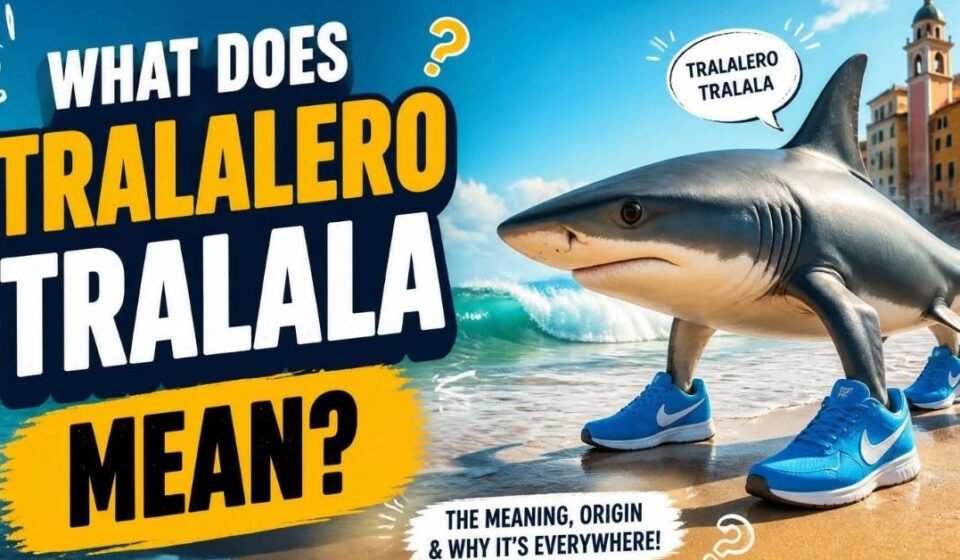
The chant eventually got paired with an odd three legged shark character wearing sneakers, and that image became the meme’s unofficial mascot. Fans started drawing, animating, and merching the character, which helped push the phrase far past its original audio clip.
That shark shows up in fan art, phone cases, and reaction memes now, proving the joke outgrew its own soundbite. It’s a good reminder that internet fame rarely stays in one format for long.
Is Tralalero Tralala Still Relevant in 2026?
Trends like this usually fade fast, but this one still pops up in comment sections and group chats. It’s settled into that “everyone gets the reference” category, even if the peak hype has cooled off.
New creators keep recycling the audio for fresh jokes, which is usually a sign a meme has staying power. Don’t be surprised if it resurfaces again the next time internet culture needs a shared inside joke.
Conclusion
“Tralalero Tralala” is proof that a phrase doesn’t need meaning to earn a spot in everyday chat. It started as random AI generated noise and turned into shorthand for carefree energy, dodged questions, and shared laughs.
Use it with friends, skip it at work, and you’ll be fine. At the end of the day, it’s just a fun way to say “I’m not stressing about this right now.”
FAQs
1. What does “tralalero tralala” mean in simple words?
It’s a nonsense phrase used to sound carefree or dodge a question, similar to saying “la la la.”
2. Is “tralalero tralala” a real word?
No. It’s an invented phrase with no dictionary definition, built purely for sound and vibe.
3. Can I use it in professional settings?
It’s best kept out of work emails and meetings since it reads as too casual for professional communication.
4. Is it positive or negative?
Neutral by default, though tone can shift it toward sarcasm or teasing depending on context.
5. Why do people use it online?
It’s catchy, flexible, and gives a low effort way to add humor or dodge a topic without sounding rude.
6. Is it similar to “I don’t care”?
Somewhat. Both signal indifference, but “tralalero tralala” leans more playful than blunt.
7. Can it be offensive?
Rarely, though the original audio clip included some edgy language that got trimmed in most family friendly remixes. On its own, the phrase itself isn’t offensive.

Matt Henry is a writer and researcher at Trexoleen, specializing in text meanings, slang, abbreviations, acronyms, and modern internet language. He is passionate about making confusing terms simple and easy to understand.