
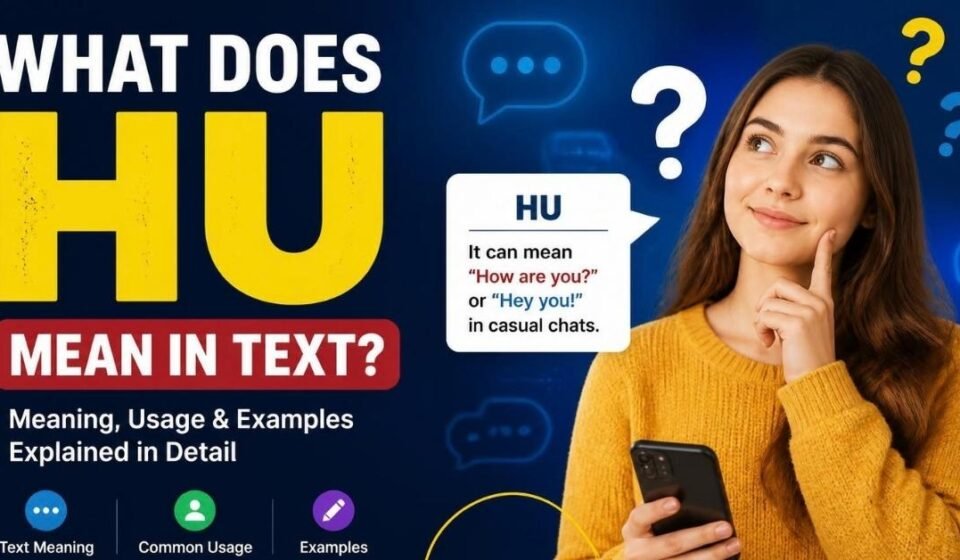
Got a message that just says “HU?” and you’re staring at your screen? You’re not alone.HU meaning in most chats is simple. It’s short for “who are you”, usually sent by someone who doesn’t recognize you.You’ll see it in text messages, DMs, and comment sections.
It can sound curious, confused, or a little cold, depending on the moment.Let’s break down what it means, where it came from, and how to reply without making things weird.
HU: Quick Meaning
HU in text usually stands for “who are you.” The sender types two letters because they want a fast identity check.
It’s texting slang, not an official word. You won’t find it in a dictionary, so context does the heavy lifting.
Simple Examples
Picture this. A stranger texts you “hey,” and you fire back “HU?”
Or you get a message from an unknown number. Your reply is “HU this?”
Another case: a new follower slides into your direct messages (DMs). You type “HU bro?” to find out who’s there.
Origin and Background

Nobody can point to the first person who typed HU. Like most internet slang, it grew out of daily use rather than a single moment.
It’s a phonetic shortcut. “Who” and “HU” sound close, so people cut the letters and moved on.
The Rise of Short Abbreviations
Remember keypad phones? Every letter took several taps, and SMS language was born from that pain.
Character limits made it worse. People squeezed short abbreviations like WYD (what are you doing), IDK (I don’t know), and BRB (be right back) into every line.
Smartphones fixed the typing problem. The habit stuck anyway, because typing speed still matters in fast online chats.
Social Media Influence

Platforms like Instagram, TikTok, and Snapchat reward quick reactions. Nobody wants to write a paragraph under a video.
That pushed abbreviation culture even further. Younger internet users picked up HU the same way they picked up other slang terms, by copying each other.
Today, social media influence spreads a phrase in days. One viral comment section can put HU in front of thousands of people.
Real-Life Conversations

Definitions are fine, but you learn slang by seeing it. Here are four real situations.
WhatsApp Conversation
Your phone buzzes with an informal WhatsApp conversation from a number you haven’t saved.
Them: Hey, remember me? You: HU? Number’s not saved. Them: It’s Sam from the gym.
A short reply solved the mystery. That’s HU doing its job.
Instagram DM Example
A random account sends “nice pic” to your Instagram DMs. No profile photo, no bio.
You answer “HU tho?” It’s quick, and it tells them you want a real answer before you chat.
Most people reply with a name or a mutual friend. If they don’t, you can ignore the thread.
TikTok Comment Section
Someone comments “you’re wrong” on your video. You check their page and find nothing.
Your reply: “HU even?” The TikTok comments are full of lines like this, half joke and half challenge.
Other viewers add a laughing emoji, and the thread takes off.
Text Message Example
It’s 11 p.m. and a message reads “are you awake?” from an unknown contact.
You type “HU?” and wait. Silence often means a wrong number.
If a name shows up, you can decide whether to keep talking.
Emotional and Psychological Meaning
Two letters can carry a lot of feeling. The tone comes from the person and the moment.
1. Curiosity
Sometimes HU is honest curiosity. You want to know who’s on the other end.
A gentle version sounds like “HU? Do I know you?” That’s a real question, not an attack.
2. Confusion
Other times it signals confusion. The message came out of nowhere, so your brain hit pause.
Think of unexpected messages at odd hours. HU is the digital version of squinting at the screen.
3. Playful Teasing
Friends use HU as playful teasing. It works like a fake “who dis” after a friend changes their profile picture.
Add a laughing emoji and the message turns humorous texting. Without the emoji, it can land flat.
4. Light Social Distance
HU can also create social distance. It says “I don’t know you, so introduce yourself.”
That sets communication boundaries without a long explanation. It’s useful, but it can feel chilly to the other person.
Usage in Different Contexts
The same two letters behave differently depending on where you type them. Here’s the quick tour.
1. Social Media
On social media, HU is common in comments, DMs, and group chats. The tone runs from casual to sarcastic.
You’ll often see it next to a crying emoji or an eyes emoji in social media reactions. It also shows up in gaming chats when a stranger joins your lobby.
2. Friends and Relationships
Among friends texting, HU is usually light. It’s a joke about a new number or a changed nickname.
In relationship conversations, though, it can sting. Sending “HU?” to a partner might read as cold, so be careful there.
3. Work or Professional Settings
Skip it at work. Workplace communication calls for clear, polite wording.
Try “May I ask who this is?” instead. It’s a professional alternative that keeps things respectful.
4. Casual vs Serious Tone
In casual conversations, HU passes without anyone noticing. In serious conversations, it can feel abrupt.
Match your tone to the situation. If the topic is sensitive, write the full phrase.
Common Misunderstandings
Short slang trips people up. These four mix-ups happen most.
1. People Think It Means “Hello”
Some readers see HU and assume it’s a greeting. That’s the Hi vs HU problem, and it causes real greeting confusion.
HU asks a question. Hi opens a chat.
2. It Can Sound Rude
Without softening words, HU can feel blunt. A stranger might read it as an accusation.
Adding “sorry” or “hey” helps. A friendly tone protects texting etiquette and your reputation.
3. It May Be Misread as a Typo
Plenty of readers assume it’s a typing mistake. They think you meant “hu” as part of “huh” or “you.”
That’s a slang misunderstanding, and it’s common. A question mark helps signal the meaning.
4. Not Everyone Recognizes It
Older relatives or coworkers might not know it. Online vocabulary varies by age and community.
If you’re unsure, spell it out. Communication clarity beats looking trendy.
Comparison Table
This table shows how HU stacks up against similar phrases.
| Phrase | Meaning | Tone | Best Use |
| HU? | Who are you | Direct, casual | Unknown texts or DMs |
| Who is this? | Full version of the same question | Neutral | Any setting |
| Hi | A greeting | Friendly | Starting a chat |
| Huh? | Confusion or “say again” | Casual | Unclear messages |
| May I ask who this is? | Polite identity check | Professional | Work or formal contexts |
Key Insight
HU works best when you already know the tone. The shorter the phrase, the more the reader fills in the blanks.
When in doubt, pick the longer version. It costs you three seconds and saves you an awkward moment.
Variations and Types of HU Usage
People stretch HU into many shapes. Here are the ten you’ll spot most.
1. HU?
The base form. It’s a blunt, two-letter identity check.
You’ll use it when you get a message from an unknown number.
2. HU This?
This one hints at an unknown contact. It asks “who is this number?” without more words.
It’s common when the caller ID shows nothing.
3. HU Again?
The sender is annoyed. They’ve heard from you before, or repeated messages are piling up.
Expect a sharper tone here.
4. HU Even Are You?
Now it’s sarcasm. It’s the same as “Who even are you?“
You’ll see it in comment sections more than private chats.
5. HU Texting?
The sender wants to know “Who’s texting me?” It shows up after unknown messages from a new contact.
It’s calm, just direct.
6. HU Calling?
Same idea, but for voice. Think of “Who’s calling?” after a missed call.
It’s useful for unknown calls and spam numbers.
7. HU There?
Here the person checks who’s on the other end of a chat. It’s common in online chats or games.
It can also mean “is anyone there?” so read the context.
8. HU Dis?
This is a slangy version of “who’s this?” Slang variations like “dis” show up in friend groups.
It’s casual and often teasing.
9. HU Now?
The sender is asking about a new contact. Maybe you changed numbers again.
It signals mild frustration, so a quick intro helps.
10. HU Lol
Add “lol” and the mood softens. It’s playful, like a joke between friends.
Still, don’t send it to someone you barely know.
How to Respond When Someone Uses HU
A good reply keeps the chat going. Pick the flavor that fits you.
Casual Replies
Keep it simple. “It’s Mia, from class!” works every time.
You could also say “Hey, it’s Dan, got this number recently.” Short and clear wins.
Funny Replies
If the mood is light, joke around. “Your future best friend, obviously.”
Another option: “The person who owes you pizza.” Humor works only when the sender is friendly.
Mature and Confident Replies
Stay calm and give the facts. “This is Priya, we met at the college event last week.”
That’s introducing yourself with confidence. No apologies, no drama.
Private or Respectful Replies
Not sure you want to share? “I’d rather not say, who’s asking?” is a fair reply.
You keep control of your online identity and stay polite.
Regional and Cultural Usage
Slang travels differently across regions. Here’s the broad picture.
Western Culture
In Western texting culture, short forms rule. HU sits alongside IDK and WYD without raising eyebrows.
Directness is normal, so a quick “HU?” rarely offends.
Asian Culture
In many Asian digital spaces, politeness matters more. People often add respectful words before asking.
English abbreviations still spread through games and apps, but tone stays softer.
Middle Eastern Culture
In Middle Eastern digital spaces, greetings come first. A blunt “HU?” might feel rushed.
Many users mix languages, so an English abbreviation can appear inside Arabic text.
Global Internet Usage
Global internet usage blends these habits. Cultural differences shape how the same two letters feel.
Language evolution keeps moving, and modern internet language changes fast.
Other Meanings of HU You Might Run Into
HU isn’t only slang for “who are you.” Sometimes it’s the code for Hungary, and sometimes it’s a company or school abbreviation.
Some casual chats use it for “how you” or a stretched “huh.” Check the surrounding words before you decide.
How to Handle Unknown Numbers Safely
Getting an unknown number text is normal, but scams exist. Don’t click links from strangers.
Never share bank details, OTP codes, or your address in reply to an identity check. Block and report if something feels off.
If a real person answers, save the number to your contact list with a clear name. That saves future guessing.
Conclusion
HU is a small abbreviation with a big range of tones. Most of the time it means “who are you,” and context tells you the rest.Use it with friends and switch to full sentences at work.
Clear wording protects both your time and your online manners.Now it’s your turn. Has someone ever sent you a mystery “HU?” Drop your story in the comments and share this guide with a friend who keeps asking.
FAQs
What does HU mean in texting?
HU usually means “who are you.” It’s a quick identity clarification sent to an unknown sender.
Is HU rude?
It can be, depending on tone. Add a friendly word or emoji to soften it.
Why do people use HU instead of “Who”?
It’s faster to type, and it mirrors how “who” sounds. That’s classic digital shorthand.
Can HU mean something else?
Yes. It can also stand for “how you,” “huh,” or Hungary’s country code. Read the language context first.
Should I use HU in professional messages?
No. Use “May I ask who this is?” for a polite, professional message.
Is HU common on social media?
It’s common in comments, DMs, and group chats. It’s less common in formal posts.
How should I respond if someone sends HU?
Give your name and how you know them. A short intro keeps things smooth.

Matt Henry is a writer and researcher at Trexoleen, specializing in text meanings, slang, abbreviations, acronyms, and modern internet language. He is passionate about making confusing terms simple and easy to understand.